Regulation
This page lists the latest Regulation news and market analysis. Browse articles, expert insights, and updates in this category on JrKripto. Stay informed with in-depth coverage of cryptocurrency trends and developments.
News
Regulation News
Regulation News
Browse all Regulation related articles and news. The latest news, analysis, and insights on Regulation.
Daily Market Summary with JrKripto 1 May 2025
You can find our article “Daily Market with JrKripto” below, where we have compiled the most important developments in global and local markets. Let's analyze the general market conditions together and take a look at the latest assessments.Bitcoin (BTC) is currently trading at $95,300. With a strong bullish movement starting from the $75,930 support, the price has settled in the $95,000 – $96,000 resistance band. If this region is exceeded, it can be expected that the rise in BTC will continue to the level of $ 101,000. However, the first support point for profit sales that may occur at current levels will be $ 90,500. If it hangs below this level, it is possible for the decline to deepen to the level of $ 86,500.Ethereum (ETH) is trading at $1,810. With the rise that started at the level of $ 1,486, the price continues to stay above $ 1,800. If the upward movement continues, the resistance levels of $1,888 and $1,950 can be targeted. However, $1,790 will be followed as the first support in possible withdrawals. If persistence is achieved below this level, the $1,700 level for ETH will be the next strong support. Persistence above $1,790 is critical for the continuation of the short-term upward trend.Crypto NewsDonald Trump's son Eric has said that banks that do not adopt crypto will disappear within 10 years.Coinbase has added WLD to its listing roadmap.The United States has contacted China for talks on customs tariffs, Chinese media have confirmed this.North Carolina has passed a bill to create a Strategic Bitcoin Reserve.Canary has applied for a spot ETF for SEI.CryptocurrenciesThose Who Have Risen The Most:VIRTUAL →increased by 42.4% to $ 1.77.BEAM →increased by 23.0% to $0.0088351.PRIME →increased by 22.8% to $3.33.AI16Z →increased by 20.8% to $0.30912477.AERO →increased by 20.7% to $0.71983165.The Ones Who Fell The Most:DRIFT → fell by 7.7% to $0.67915288.LAYER → fell 6.7% to $3.01.DCR → fell 5.6% to $13.13.QGOLD → fell 2.3% to $3,225.41.XAUT → fell 2.1% to $3,234.26.Other Data:Fear Index:Bitcoin: 55Ethereum: 49Dominans:Bitcoin: 64.57% ▲ 0.11%Ethereum: 7.48% ▲ 0.08%Total Net ETF Inflows Per Day BTC ETFs: -56.30 Million$ ETH ETFs: -2.30 Million$ Data to Follow TodayMay 1 - Turkish Labor DayApplications for Unemployment BenefitsExpectation: 224KPrevious: 223KManufacturing Purchasing Managers' Index (PMI) (April)Expectation: 50.7Previous: 50,2ISM Manufacturing Purchasing Managers' Index (PMI) (April)Expectation: 48.0Previous: 49.0Global MarketsUS stock markets ended the day yesterday with a mixed and low volume course. However, the strong technology balance sheets announced after the session close, especially Microsoft's 6.9% and Meta's 5.4% increases, caused positive pricing in futures. Nasdaq futures indices were at a premium of up to 1.5%. While positive expectations in the negotiations with the US trading partners are also influential in this optimism, the fact that China has not yet officially participated in this process continues the cautious approach in the markets.The macroeconomic data showed a weak picture. Private sector employment in the US increased by only 62 thousand people and remained well below expectations. This situation shows that companies are being more cautious in hiring, especially due to tariff-related uncertainties. In addition, the US economy contracted by 0.3% in the first quarter of the year. This contraction was based on a higher-than-expected increase in imports and a weakening in personal consumption. While PCE inflation gave mixed signals, it registered a decrease on an annual basis, indicating an easing in price pressures.The ISM Manufacturing PMI data for March has moved back into contraction territory with 49 points. The index, which can only stay in the expansion zone for two months, showed that the contraction in new and accumulated orders slowed down, but employment losses increased. Supply shortages have accelerated price increases, while inventories have grown and delivery times have extended. This index is expected to decline to 48 points in April. Such data is critical for interpreting the impact of tariffs on businesses.On the international front, while the Bank of Japan left its policy rate unchanged, its failure to give clear signals about an interest rate hike led to the weakening of the Japanese Yen. Oil prices, on the other hand, tested 4-year lows with the news that OPEC+ may increase production. The OPEC+ meeting on May 5 will be critical in this sense.In addition, an agreement was signed between Ukraine and the United States on access to Ukraine's natural resources Dec. This development is interpreted as an effort to get support from Kiev's Trump wing before the upcoming elections in the United States.For the rest of the week, the data calendar is quite busy. In particular, the non-agricultural employment data to be announced on Friday is of great importance for the Fed's monetary policy and may be decisive on the direction of the markets. Apple and Amazon balance sheets will be announced today, and the general mood in the technology sector will be clarified with these data.The Most Valuable Companies and Their Stock PricesApple (AAPL) → market capitalization of $3.19T, price per share of $212.50, an increase of 0.61%Microsoft (MSFT) → market capitalization of $2.94T, price per share is $395.26, an increase of 0.31%NVIDIA (NVDA) → market capitalization of $2.66T, price per share of $108.92, down 0.09%Amazon (AMZN) → market capitalization of $1.96T, price per share of $184.42, down 1.58%Alphabet (GOOG) → market capitalization of $1.94T, price per share of $160.89, down 0.72%Precious Metals and Foreign Exchange PricesGold: 3961 TL Silver: 39.31 TL Platinum: 1191 TL Dollar: 38.44 TL Euro: 43.62 TL Hope to meet you again tomorrow with the latest news!

Daily Market Summary with JrKripto 30 April 2025
Below is today's "Daily Market Update with JrKripto," where we compile the most significant developments in global and local markets. Let's analyze the general market conditions together and review the latest assessments.Bitcoin (BTC) is currently trading at $95,090. Following a strong upward movement from the $75,930 support level, the price has settled above $94,000. BTC is now testing the resistance band between $95,000 and $96,000. If this area is surpassed with significant volume, the next target could be $101,000. However, if profit-taking occurs at current levels, the first support is at $90,500. Sustained movement below this level could lead to a correction down to $86,500.Ethereum (ETH) is trading at $1,820. The recovery process that began from the $1,486 support level has maintained the price above $1,800. In the continuation of the upward movement, the $1,888 and $1,950 levels can be monitored as resistance. However, a pullback from the $1,820 level highlights $1,790 as the first support. Below this, a stronger support at $1,700 can be observed. To maintain ETH's current upward trend, staying above $1,790 is critically important.Crypto NewsThe SEC has concluded its investigation into PayPal's PYUSD stablecoin without enforcement action.Trump: "India is doing great; I think we will have an agreement on tariffs."The UK Chancellor states that the United Kingdom aims to be a "world leader in digital assets."The UK will collaborate with the US to increase cryptocurrency adoption.China has lifted the 125% tariff on imported ethanol from the US.CryptocurrenciesTop Gainers:DRIFT → Increased by 31.8% to reach $0.7651.AKT → Increased by 14.7% to reach $1.53.PLUME → Increased by 12.8% to reach $0.1925.AIC → Increased by 10.5% to reach $0.2011.FLOKI → Increased by 10.3% to reach $0.00009251.Top Losers:SAFE → Decreased by 13.9% to $0.5254.PENGU → Decreased by 13.3% to $0.0106.VIRTUAL → Decreased by 10.5% to $1.32.AI16Z → Decreased by 7.2% to $0.2799.DEEP → Decreased by 6.9% to $0.1942.Other Data:Fear Index:Bitcoin: 57Ethereum: 49Dominance:Bitcoin: 64.50% ▲ 0.10%Ethereum: 7.46% ▼ 0.14%Daily Total Net ETF Inflows:BTC ETFs: $172.80 MillionETH ETFs: $18.40 MillionData to Watch TodayADP Non-Farm Employment (April):Expectation: 114K | Previous: 155KGross Domestic Product (GDP) (Quarterly) (Q1):Expectation: 0.2% | Previous: 2.4%Core Personal Consumption Expenditures (PCE) Price Index (Monthly) (March):Expectation: 0.1% | Previous: 0.4%Core PCE Price Index (Annual) (March):Expectation: 2.6% | Previous: 2.8%Energy Information Administration Crude Oil Inventories:Expectation: -0.600M | Previous: 0.244MGlobal MarketsUS stock indices closed higher following optimistic statements on tariffs by Commerce Secretary Lutnick, marking the sixth consecutive positive trading day. The S&P 500 rose by 0.58%, the Dow Jones by 0.75%, and the Nasdaq by 0.55%. All sectors in the S&P 500, except for energy, closed in positive territory. The strongest performing sectors were financials (0.97%), materials (0.92%), consumer staples (0.77%), and real estate (0.74%).On the economic data front, a weak outlook persisted. The Conference Board Consumer Confidence Index fell from 93.9 in April to 86.0, reaching its lowest level in five years. The expectation was 87.7. The expectations index dropped by 12.5 points to 54.4, the lowest since October 2011, remaining below the 80-point level considered a recession indicator for the third consecutive month. The current conditions index declined to 133.5, while consumers' 12-month inflation expectations rose from 6% to 7%, the highest since November 2022. The JOLTS job openings data came in at 7.19 million, below the expectation of 7.49 million, marking the lowest level in four years. The housing price index also recorded a lower-than-expected increase.Asian markets showed mixed trends, while European markets are expected to start the day flat. Today, US markets will focus on Q1 GDP data, PCE inflation data, and ADP private sector employment data.Most Valuable Companies and Stock PricesApple (AAPL) → Market Cap: $3.17T, Share Price: $211.21, ▲ 0.51%Microsoft (MSFT) → Market Cap: $2.93T, Share Price: $394.04, ▲ 0.74%NVIDIA (NVDA) → Market Cap: $2.66T, Share Price: $109.02, ▲ 0.27%Amazon (AMZN) → Market Cap: $1.99T, Share Price: $187.39, ▼ 0.17%Alphabet (GOOG) → Market Cap: $1.95T, Share Price: $162.06, ▼ 0.22%Borsa IstanbulA weak outlook and capital outflows continue in Borsa Istanbul. Yesterday, the BIST 100 index fell below the 9,250 support level, with technical indicators showing clear sell signals. This decline positions the 9,000 – 9,100 range as the next support area. On the upside, the 9,250 – 9,300 band now serves as resistance. Given that today is the last trading day of April, the closing of arbitrage positions in VIOP share contracts and the stock market may create additional selling pressure on BIST.The Central Bank's weighted average funding cost (WAFC) remains close to 49%. Q1 financial results have generally been weak, though some stocks like ASELS and TABGD have shown positive performance. However, the expected strong outlook for the earnings season has not been achieved. Today's agenda includes Koç Holding (KCHOL) financial results, domestic foreign trade data, growth data in Europe, and employment, housing, and consumption-focused data in the US.Turkey's 5-year CDS premium has risen to 362 basis points, showing an upward trend contrary to the average of emerging markets. This indicates an increased risk perception specific to TL assets and the continuation of foreign sales in BIST.The unemployment rate fell to 7.9% in March, seasonally adjusted, reaching the lowest level in the series. However, the underemployment rate increased over the past three months, reaching 28.8%, the highest since June 2023. The labor force participation rate stood at 53.4%. The Economic Confidence Index for April decreased by 4.2% monthly to 96.6, marking the sharpest decline since August 2023. The subcomponents of the index indicate weakened expectations on both the consumer and producer sides.Yesterday, sales in aviation stocks determined the direction of the index, and the BIST 100 closed the day with a 0.9% loss. Generally weak earnings and rising interest rates are increasing pressure on the index. A selling trend is expected to continue in Borsa Istanbul today.The BIST 100 index fell to 9,217 yesterday before closing at 9,225. The 9,221 level is being monitored as short-term support, while the 9,044 – 8,870 range serves as a stronger support area due to previous lows. As long as the index stays above this region, rebound buying may occur. Otherwise, a stronger decline towards the 8,618 – 8,500 band could be experienced. On the upside, the 9,494 – 9,594 band stands out as near-term resistance. If this band is surpassed, movement towards the 9,740 – 9,895 range may be seen. Support levels for BIST 100: 9,221 – 9,044 – 8,870 – 8,725 – 8,618; resistance levels: 9,494 – 9,594 – 9,740 – 9,895 – 9,953.Most Valuable Companies in Borsa Istanbul (According to Visual Data):QNB Finansbank (QNBTR) → Market Cap: 938 billion TL, Share Price: 270.50 TL, ▼ 3.39%Aselsan Elektronik Sanayi (ASELS) → Market Cap: 626.54 billion TL, Share Price: 132.90 TL, ▼ 3.28%Türkiye Garanti Bankası (GARAN) → Market Cap: 430.08 billion TL, Share Price: 101.70 TL, ▼ 0.68%Türk Hava Yolları (THYAO) → Market Cap: 410.89 billion TL, Share Price: 289.00 TL, ▼ 2.94%ENKA İnşaat ve Sanayi (ENKAI) → Market Cap: 373.11 billion TL, Share Price: 63.80 TL, ▲ 0.24%Precious Metals and Exchange RatesGold: 4091 TLSilver: 39.97 TLPlatinum: 1201 TLUSD: 38.50EURO: 43.90

The Spot Crypto ETF Era Begins in South Korea: A Wind of Pre-Election Reform
South Korea Set to Take Major Steps in the Digital Asset SpaceAhead of the early presidential elections scheduled for June 3, the ruling People Power Party (PPP) has unveiled reform plans aimed at energizing the crypto market.Single Bank Requirement to Be RemovedThe PPP intends to remove the current rule that allows crypto exchanges to operate with only one bank.The new regulation would enable exchanges to partner with multiple banks, a move expected to increase investor access and boost competition.Legal Framework for Spot Crypto ETFsOne of the most notable pledges: Spot Bitcoin and altcoin ETFs are expected to become legally approved within this year.The PPP argues that such products would offer a safe entry point for institutional investors.Citing the growing interest in the U.S., the party believes South Korea must not fall further behind in this area.Digital Assets Promotion Act in the WorksThe PPP also plans to introduce a new legislative framework titled the “Basic Act for the Promotion of Digital Assets.”Key goals include:Clarifying listing criteriaStrengthening transparency regulationsCreating a legal foundation for security tokens (STOs)Ensuring international compliance for stablecoinsA special Digital Assets Committee, directly reporting to the president, is also under consideration to oversee the entire process.Crypto Policies Take Center Stage in Election CampaignPPP’s presidential candidate Hong Joon-pyo is campaigning on a promise to liberalize crypto regulations.He drew attention with his statement: “We will roll back regulations just like the Trump administration did.”Crypto is now not only an economic issue but a central theme in the broader political message.Parallel Announcements from RegulatorsThe Financial Services Commission (FSC) is also preparing new regulations.In January, it was announced that restrictions on institutional investors' crypto activities would be eased.The upcoming regulations will cover areas such as stablecoins, listing rules, and market transparency.Digital Transformation to Be Shaped by Election OutcomeSouth Korea is entering a new phase in crypto reform.With spot ETFs, flexible banking rules, and legal frameworks, the country could become one of Asia’s leading crypto hubs.However, the future of this transformation hinges on the election outcome.If the PPP wins, reforms could be implemented rapidly — the opposition’s stance, however, remains unclear.

Dogecoin ETF Move from 21Shares: Meme Coins Make Their Debut on the Stock Exchange
A notable development has occurred in the crypto finance world. Switzerland-based investment firm 21Shares has filed for a spot ETF for Dogecoin (DOGE) in the United States.This marks the first-ever ETF application offering institutional access to a "meme coin" like DOGE through a stock exchange-traded fund.Spot DOGE ETF: What Does It Mean?21Shares has submitted its application to the SEC for the ETF to be listed on Nasdaq.The ETF will directly track the price of Dogecoin, meaning investors will be able to invest in DOGE’s price movementwithout actually purchasing the token.If approved:Institutional investors will gain direct exposure to DOGE.Dogecoin will attain the status of a regulated investment product.The market perception of meme coins could shift significantly.After Bitcoin and Ethereum, Is It Dogecoin’s Turn?The approval of spot Bitcoin and Ethereum ETFs marked the beginning of a new era in the crypto market.Dogecoin now stands out as the first meme coin to take this step.If the DOGE ETF is approved:Institutional demand could rise.It may pave the way for new ETF applications for other altcoins.However, the process is still at the approval stage.The SEC’s stance on volatile assets will be key in shaping the decision.Who Is 21Shares?21Shares is a company known for launching multiple ETFs and ETPs based on Bitcoin, Ethereum, and crypto index baskets.Its goal is to bridge the gap between traditional capital markets and digital assets.The DOGE ETF Could Mark the Start of a New EraThe application by 21Shares is not just a new product—it could represent a significant milestone in the institutionalization of Dogecoin and similar assets.If approved, DOGE would become the first meme coin to trade on traditional markets.All eyes are now on the SEC.This decision could impact not only Dogecoin but the entire crypto ETF landscape.

Digital Euro Move from ING Bank
One of Europe’s leading banks, ING, has taken a significant step as the European Union’s new crypto regulation MiCAcomes into force. The bank has formed a consortium with other financial institutions and crypto firms to develop a euro-backed stablecoin.MiCA Regulation and the Euro Stablecoin RaceMiCA aims to regulate the crypto asset market in Europe. It introduces strict rules, especially for stablecoin issuers, such as licensing requirements, holding reserves in European banks, and transparent reporting. In this new environment, stablecoins pegged 1:1 to the euro are expected to stand out.The stablecoin developed by ING will be fully compliant with these regulations. The goal is to create a digital asset that complies with European regulations and offers secure payment options in the market.ING’s Strategic MoveThis move shows that ING is not only keeping up with technology but also aims to become a strong player in the digital finance world. At a time when rival banks like Société Générale are also making similar moves, ING is acting swiftly to take its place in the digital euro race.Producing a regulation-compliant stablecoin could give ING a significant advantage in the development of Europe’s digital finance infrastructure.Europe Prepares for Digital AssetsFollowing MiCA, digital products in Europe will become more secure and transparent. A predictable digital payment ecosystem will emerge for investors and institutions. ING’s initiative may contribute to Europe gaining a strong position in the global digital finance race.ING Takes an Early LeadWith its MiCA-compliant euro-backed stablecoin project, ING is preparing early for the digital euro infrastructure. This initiative will not only move Europe’s digital payment systems toward a corporate and regulated structure, but also help the euro gain a stronger position in the digital asset market.

Daily Market Summary with JrKripto 29 April 2025
You can find today’s “Daily Market with JrKripto” article below, where we compiled the most important developments in global and local markets. Let’s analyze the general market conditions together and take a look at the latest evaluations.Bitcoin (BTC) is currently trading at $94,700. The price has strongly continued the upward trend that started from the $75,930 support level and has now surpassed the $94,000 levels. Currently hovering near the $95,000 – $96,000resistance zone, a breakout from this region could bring $101,000 into focus. However, if profit-taking occurs around $95,000, the first support lies at $90,500. If this level is broken downward, $86,500 will be the next support level to watch.Ethereum (ETH) is trading at $1,824. The price continues its recovery that began from the $1,486 support. If the upward movement continues from the current level, the resistance levels to watch will be $1,888, followed by $1,950. On possible pullbacks, $1,790 will act as the first defense level. If that level fails, $1,700 will be the stronger support. To maintain the uptrend in ETH, staying above $1,790 is important.Crypto NewsCircle ($USDC) received approval to operate as a money services provider in Abu Dhabi, UAE.South Korea plans to approve spot crypto ETF trading later this year.Arizona became the first U.S. state to pass a $BTC reserve bill allowing 10% of public funds to be invested in virtual assets like Bitcoin. The bill now awaits Democratic Governor Katie Hobbs’ signature to become law.Standard Chartered predicts a new all-time high (ATH) for Bitcoin in Q2.U.S. Treasury Secretary Bessent says the first trade deal may be finalized this week or next.MicroStrategy purchased 15,355 BTC.Tether minted $1 billion in USDT.Top Gainers in Cryptocurrencies:SAFE → up 27.9%, now at $0.5898LAYER → up 15.0%, now at $3.12BABY → up 10.8%, now at $0.0926VIRTUAL → up 10.3%, now at $1.44MOCA → up 8.3%, now at $0.0968Top Losers:POPCAT → down 14.6%, now at $0.3684DEEP → down 11.1%, now at $0.2071WIF → down 10.3%, now at $0.5922TRUMP → down 9.7%, now at $13.75KAITO → down 9.6%, now at $0.9009Other Metrics:Fear Index:Bitcoin: 58Ethereum: 49Dominance:Bitcoin: 64.23% ▼ -0.25%Ethereum: 7.51% ▲ +1.25%Daily Total Net ETF Inflows:BTC ETFs: $591.20 millionETH ETFs: $64.10 millionData to Watch Today:Conference Board (CB) Consumer Confidence (April): Forecast: 87.7 | Previous: 92.9Job Openings and Labor Turnover Survey (JOLTS) (March): Forecast: 7.490M | Previous: 7.568MGlobal MarketsU.S. stock markets started the week positively with a heavy flow of economic data and earnings reports but couldn’t maintain gains and ended the day flat.S&P 500: +0.06%Dow Jones: +0.28%Nasdaq: -0.10%8 out of 11 major sectors closed in the green. The top performers were:Infrastructure: +0.70%Real Estate: +0.68%Energy: +0.63%Sectors underperforming included:Technology: -0.30%Consumer Staples & Discretionary: -0.15% eachEuropean markets also ended the day mostly flat to slightly positive.Today, company earnings will be the focus, especially from Visa, Coca-Cola, Spotify, and Mondelez, which will be key in assessing consumer trends and corporate outlooks.On the data side, the U.S. will release:Consumer confidenceJOLTS (Job openings)Trade balanceHousing pricesIn March, the trade deficit fell by $7.7B to $147.9B. JOLTS showed open jobs declined by 194K to 7.57M, with a hiring rate of 3.4%. Layoff and quit rates were stable at 1.1% and 2.0%, respectively.ECB will release March inflation expectations today. Asian markets showed mixed performance, while European indexes are expected to open higher.Most Valuable Companies & Stock PricesApple (AAPL) → $3.16T market cap, $210.14/share, ▲ 0.41%Microsoft (MSFT) → $2.91T, $391.16/share, ▼ 0.18%NVIDIA (NVDA) → $2.65T, $108.73/share, ▼ 2.05%Amazon (AMZN) → $1.99T, $187.70/share, ▼ 0.68%Alphabet (GOOG) → $1.97T, $162.42/share, ▼ 0.87%Borsa Istanbul (BIST)Rising interest rates, weak earnings, and ongoing risks have kept the BIST 100 index tightly ranged between 9250–9500for nearly a month.Yesterday, the index dropped 1.3%, closing at 9307, with banking stocks falling 3.2%, diverging negatively.Technical levels to watch:Support: 9250 → 9100/9000 → 8870/8618Resistance: 9390 → 9500 → 9580 → if broken, a move to 9740–9895 is possibleUpcoming Turkish data:March unemployment rateApril economic confidence index (previous: 100.8, decline expected)CDS risk premium started the day at 357 bps.Both technical and fundamental indicators suggest staying cautious on BIST.Top Companies by Market Cap in BISTQNB Finansbank (QNBTR) → ₺927.95B, ₺281.00/share, ▲ 1.44%Aselsan (ASELS) → ₺632.02B, ₺138.20/share, ▼ 0.29%Turkish Airlines (THYAO) → ₺431.60B, ₺301.75/share, ▼ 3.52%Garanti Bank (GARAN) → ₺425.46B, ₺101.90/share, ▲ 0.59%ENKA (ENKAI) → ₺376.33B, ₺63.55/share, ▼ 1.01%Precious Metals & FXGold: ₺4,086Silver: ₺41.18Platinum: ₺1,227USD/TRY: ₺38.43EUR/TRY: ₺43.82Looking forward to seeing you again tomorrow with the latest updates!

Arizona Becomes the First State in the US to Pass a Bitcoin Reserve Law
Arizona Approves Historic Legislation to Invest Public Funds in Bitcoin and Digital AssetsIn a landmark move for public finance, the state of Arizona has approved two pivotal bills allowing up to 10% of public funds to be invested in digital assets like Bitcoin. This bold step positions Arizona as a national leader in integrating digital finance into government operations.Two Key Bills: SB1025 and SB1373The first bill, SB1025, authorizes Arizona’s State Treasurer to allocate up to 10% of public funds into Bitcoin, representing a potential investment of approximately $3.14 billion.The second, SB1373, establishes the “Digital Assets Strategic Reserve Fund.” This fund will be supported by seized crypto assets and future allocations, and will be managed with transparency through blockchain technology and rigorous risk control standards.All Eyes on Governor HobbsTo take effect, both bills require the signature of Arizona Governor Katie Hobbs. While Hobbs previously stated she would veto all legislation due to budget disputes, a compromise was reached on April 24, clearing the path for approval.Now the spotlight is on the Governor’s decision. If signed, it will formally establish Arizona as a pioneer in incorporating digital assets into public finance.Could This Be the Start of a Bigger Trend?Experts believe Arizona’s move could serve as a blueprint for other states — and possibly even other countries.Adding Bitcoin and digital assets to public investment portfolios is seen as a compelling strategy for diversification and inflation protection.Naturally, such investments come with risks, including market volatility and regulatory uncertainty. However, Arizona’s approach proactively includes oversight mechanisms designed to mitigate these challenges.A New Era of Public Sector Crypto StrategyArizona’s passage of SB1025 and SB1373 marks a turning point — digital assets are no longer seen as exclusive to the private sector, but are now recognized as strategic financial instruments for public institutions as well.Governor Hobbs’ upcoming decision will be pivotal — not just for Arizona, but as a potential reference point for the future of the global digital economy

Coinbase Launches Free Conversion to PayPal's PYUSD Stablecoin: The Stablecoin Race Is Accelerating
Coinbase Launches Free Conversion Between PayPal’s PYUSD Stablecoin and U.S. DollarsCoinbase has introduced a free conversion service between PayPal’s stablecoin, PYUSD, and the U.S. dollar, aiming to accelerate the adoption of on-chain payments. This move intensifies competition within the rapidly growing stablecoin market.Coinbase and PayPal Expand Their PartnershipBy offering free, seamless conversion between PYUSD and U.S. dollars to both retail and institutional users, Coinbase is making stablecoin adoption easier than ever.Additionally, Coinbase will integrate PYUSD support across PayPal’s vast commercial network, facilitating the broader use of stablecoins in everyday transactions and promoting the growth of stablecoin-based payment solutions.Stablecoins are gaining attention for offering faster and more cost-effective alternatives to traditional payment systems, particularly in the realm of cross-border transactions, where their usage is witnessing significant growth.Competition in the Stablecoin Market Heats UpThe stablecoin market is rapidly evolving into a massive sector expected to reach a $2 trillion market cap by 2028.According to Standard Chartered estimates, the market, currently valued at around $220 billion, is poised for exponential growth in the coming years.With regulatory developments accelerating in the U.S., competition among stablecoin issuers is intensifying. Binance and Circle have partnered to promote the use of the USDC stablecoin as both a trading pair and a payment method. Circle has also announced a new network for international remittances.Meanwhile, Tether, the market leader with its USDT stablecoin boasting a massive $140 billion market cap, is reportedly exploring the launch of a new stablecoin specifically for U.S. users.PayPal’s PYUSD Continues Its Growth TrajectoryLaunched in 2023, PayPal’s PYUSD stablecoin has already reached a market cap of $860 million. To encourage adoption, PayPal now offers U.S.-based token holders an annual yield of 3.7% on PYUSD holdings.With its new partnership with Coinbase, PYUSD is expected to reach a broader audience across both retail and institutional markets, further boosting the acceptance of stablecoin-based payment systems within the global financial ecosystem.Stablecoin Market Highlights:Coinbase and PayPal launch free PYUSD-to-USD conversionStablecoin market projected to hit $2 trillion by 2028Tether exploring a new stablecoin for U.S. usersBinance and Circle form a partnership to promote USDCPayPal’s PYUSD reaches a $860 million market cap

SEC's April 25 Crypto Roundtable: Paul Atkins' Promise of Clear Regulation
Regulatory Clarity for Crypto Markets Begins to Emerge at the U.S. SECThe U.S. Securities and Exchange Commission (SEC) is finally making strides toward clearer regulations for the crypto industry. On April 25, a Crypto Roundtable event centered around the critical issue of "custody," marking an official step toward long-awaited regulatory clarity.Opening Statement from Paul Atkins: “Uncertainty Is Over”Newly appointed SEC Chair Paul Atkins delivered a strong opening message: "Uncertainty is over. Clear rules are coming." In his remarks, Atkins sharply criticized former SEC Chair Gary Gensler’s enforcement-driven and often confusing approach, pledging instead to work alongside the Trump administration and Congress to develop a new, innovation-friendly regulatory framework.Markets interpreted Atkins’ statement as a highly encouraging signal for the future of crypto regulation.Key TakeawaysCommitment to clear and long-term regulationA new regulatory framework for custody servicesFull segregation of customer assetsDaily transparency reporting for stablecoin reservesMinimum capital and cybersecurity standards for custodiansWhy Custody Definitions MatterThe event’s primary focus was how and by whom crypto assets should be securely held. Under the slogan "Know Your Custodian," the SEC's vision is to subject banks, broker-dealers, and private trust companies to the same set of rules.This approach aims to promote fair competition across the industry while enhancing asset security for both retail and institutional investors.Protecting Customer Funds: A Safeguard Against Another FTXOne of the major discussion points was how to protect customer funds in the event of an exchange collapse. Under the new model, customer assets must be fully segregated from custodians’ balance sheets, ensuring that investors are shielded from disasters like the FTX collapse.This move is seen as critical for restoring trust in the crypto markets.Stablecoin Reserve Transparency RequirementsNew rules for stablecoin issuers were also outlined. Issuers will be required to report their reserve assets daily and undergo independent audits.This step will guarantee that major stablecoins like USDC and USDT are fully backed, which could boost confidence among institutional investors and strengthen market stability.Stronger Capital Requirements and Cybersecurity StandardsCustodians offering crypto custody services will now face minimum capital requirements, as well as strict cybersecurity protocols.Measures such as multi-signature wallet management, key protection, and rigorous cybersecurity testing will become industry standards, increasing the sector’s resilience to both internal and external threats.Roadmap: An Accelerated TimelineAtkins announced plans to open draft regulations for public comment by summer, without waiting for Congressional approval, aiming to finalize the rules by year-end.This fast-tracked approach could reduce regulatory uncertainty, lower transaction costs, and speed up licensing processes across the crypto industry.SEC Shifts from Fear to GuidanceThe April 25 meeting signaled a significant paradigm shift in how the SEC views the crypto sector — moving from a strategy of intimidation to one of clear rulemaking.The clarity around custody regulations is expected to not only enhance investor protection but also help reposition the U.S. as a global hub for crypto innovation.

Why SEC’s April 25 Meeting Is a Turning Point for Crypto
Cryptocurrencies are fundamentally changing the traditional financial system, but regulators are not keeping up. At this point, the U.S. Securities and Exchange Commission (SEC) has taken action. The SEC has begun a series of critical meetings to clarify regulations regarding digital assets.The first meeting took place on April 11. However, the second meeting is the most important one: the meeting to be held on April 25, 2025 (Today). The main agenda of this meeting is how and where crypto assets will be stored.Crypto Storage on the TableThis meeting, organized as part of the SEC's "Crypto Clarity Spring Offensive" project, will last approximately four hours. At the event, big names in the financial sector, government officials and legal experts will come together to exchange ideas on "crypto storage," one of the biggest problems in the sector.Who is on the Panels?The meeting focuses on two fundamental questions regarding crypto custody:1. Crypto Custody with Broker-DealersThis panel will feature industry figures such as Jason Allegrante from Fireblocks, Rachel Anderika from Anchorage Digital Bank, Terrence Dempsey from FidelityDigital Assets, and Mark Greenberg from Kraken. The legal and practical aspects of custodying crypto assets with the broker-dealer model will be discussed.2. Custody Obligations of Investment AdvisorsThe other panel will address the issue from a more legal perspective. Legal experts such as Justin Browder from Simpson Thacher & Bartlett, Neel Maitra from Dechert, Ryan Louvar from WisdomTree, and Adam Levitin from Georgetown University will speak here. In particular, the incompatibility of current rules with the crypto world will be discussed.Top Names OpenOne of the details that makes the meeting important is the participation of SEC Chairman Paul Atkins in person.Chairman Atkins will be joined by Crypto Task Force Chief Richard Gabbert and SEC Commissioners Hester Peirce, Caroline Crenshaw and Mark Uyeda.Atkins’ participation is considered the biggest indicator that the SEC is taking this issue seriously.Why is this meeting so critical?The SEC’s traditional rules do not fit well with the decentralized and always-on crypto world. This meeting could be one of the first steps for new regulations that will address this incompatibility.It could form the basis for updating regulations.Sustainable solutions to custody issues will be discussed.Important signals will be given to understand the SEC’s general approach.This meeting is more than a simple meeting for the crypto sector: It could determine the future of the sector.The SEC’s Impact So FarThe SEC has issued both fines and regulatory guidance on crypto to date. However, the industry often criticizes the SEC’s stance as “first impose fines, then make rules.” These meetingspresent an important opportunity to change this approach.What’s Next?The roundtables will continue and the upcoming sessions will include:• May 12, 2025: Tokenization• June 6, 2025: DeFi (Decentralized Finance)These events will set the SEC’s roadmap for crypto regulation.SEC Prepares to Change the RulesThis meeting, which will take place today, will delve into one of the most critical issues in the crypto industry: custody.Chairman Atkins’ personal participation increases the importance of the meeting. Even if the rules do not change immediately after the meeting, it is certain that clear messages will be sent to the market. Therefore, everyone involved in the crypto world should closely follow this meeting and its results.

A New Page Is Opening in the Crypto World With the New SEC Chairman Paul Atkins
Paul Atkins, who sits in the chair of the US Securities and Exchange Commission (SEC), is seen asa promising name for the crypto sector. Atkins, who is expected to provide the regulatory claritythat the market has been waiting for for a long time, is known for his proximity to the free market inhis previous positions. Investors and industry representatives welcome him as an open andconsistent regulator for innovation.There is a strong expectation that the SEC will establish more transparent and understandable rulesduring the Atkins era.Who is Paul Atkins?Paul Atkins previously served as Dec Commissioner from 2002 to 2008. Known for his market-friendly approach during his tenure, Atkins supported simple regulations by avoiding unnecessaryconfusion. April 21, 2025 Atkins, who started his job as of April, was nominated by PresidentTrump and as soon as he started his job, Deciphered the crypto money regulations among thepriority issues.Spot ETF Applications are an Important Agenda ItemSince Atkins took office, one of the hottest topics on the SEC's agenda has been spot ETFapplications. There are 72 crypto-based spot ETF applications currently being evaluated by theSEC. Among these applications are powerful altcoin projects such as XRP, Solana, Dog Decoin,Cardano, BNB and Chainlink, as well as thematic coins such as Trump and Melania.This wide range shows that the crypto market is now attracting serious institutional interest not onlyin large projects, but also in community-based and thematic projects.What is Expected in Crypto Regulations?Given Atkins' background, it is thought that he will not be harsh towards the crypto market, but onthe contrary, he will take a more logical and constructive approach. The general expectations in themarket are as follows:Clear, understandable and long-term applicable regulatory rules.Regulations that do not hinder innovation and development while protecting investors.An approach that encourages corporate investment but also takes care of the individual investor.This situation will have a positive impact not only on regulations, but also on market psychology.The reduction of uncertainties and the formation of an environment of trust may lead to positivemovements in the prices of crypto assets.A New and Positive Era in CryptoPaul Atkins' SEC chairmanship is not just a name change in the crypto world; it heralds a muchbroader transformation. It seems possible that we will see clearer rules, increased investorconfidence and a growing market in the new period.

A Step Forward in the New Hampshire Bitcoin Reserve Law: Digital Transformation Is Accelerating
New Hampshire Poised to Make History with Bitcoin Reserve BillThe small but ambitious state of New Hampshire is preparing to make a historic move in the crypto world. On April 23, 2025, the Senate’s Ways and Means Committee voted overwhelmingly—4 to 1—to approve the Bitcoin Reserve Bill (HB302).What Does HB302 Propose?The bill would allow up to 10% of New Hampshire’s general fund to be invested in digital assets and precious metals.However, the criteria for eligible digital assets are strict: the asset must have a market capitalization exceeding $500 billion — a benchmark that, as of today, only Bitcoin meets.How the Process Is UnfoldingJanuary 2025: Bill introduced to the House of RepresentativesMarch 2025: Passed the House by a 192-179 voteApril 2025: Approved by Senate committee with a 4-1 voteNext Steps: Awaiting a full Senate vote, followed by the governor’s signature to become lawIf successful, New Hampshire would become one of the first states to officially adopt Bitcoin as a reserve asset.What Are the Key Points of Debate?Supporters argue that Bitcoin’s limited supply offers superior protection and long-term returns compared to traditional assets.Critics counter that the state treasury already has the authority to invest in digital assets, making this bill redundant. They also highlight Bitcoin’s volatility as a potential risk for public funds.New Hampshire’s Digital Vision Extends Beyond HB302The state isn’t stopping with Bitcoin reserves. Other legislative efforts underway include:HB639: Establishing blockchain-based dispute resolution mechanisms and regulatory frameworksHB310: Regulating the tokenization of real-world assets and the use of stablecoinsNew Hampshire is clearly positioning itself as an active player in the digital finance revolution.Growing Competition: Arizona Makes Its MoveNew Hampshire’s initiative is inspiring other states to act. Arizona, for instance, is now working on its own Bitcoin reserve strategy.Competition in the digital asset space is no longer just among companies — it's heating up between states as well.A Strategic Turning PointIf HB302 becomes law, New Hampshire will not only cement its status as a pioneer among states but also send a powerful message about embracing technological and financial innovation.Integrating digital assets into public finance signals a major shift with economic, technological, and political implications.The crypto world—and the broader financial industry—is watching these developments closely.Frequently Asked Questions (FAQ)What exactly does HB302 cover?It allows up to 10% of state funds to be invested in precious metals and digital assets with a market capitalization above $500 billion—currently, only Bitcoin qualifies.Where does the bill currently stand?It has passed the Senate committee and is awaiting a full Senate vote, after which it will require the governor’s approval.Are other states pursuing Bitcoin reserve strategies?Yes. Arizona is also developing its own Bitcoin reserve plan, though no official legislation has passed yet.Could other cryptocurrencies be included in the future?Under current guidelines, only digital assets with a market cap over $500 billion are eligible. At present, that’s Bitcoin alone.Why is this bill significant?HB302 showcases New Hampshire’s vision for adapting to the digital economy and demonstrates its commitment to innovation by modernizing the state’s financial infrastructure.

A Big Partnership from the Financial Giants: The Twenty One Capital Era Begins For Bitcoin
Major Shake-Up in Crypto Markets: Cantor Fitzgerald, SoftBank, Tether, and Bitfinex Launch Twenty One CapitalA groundbreaking development is unfolding in the crypto space. Leading financial giants Cantor Fitzgerald, SoftBank, Tether, and Bitfinex are joining forces to launch a new Bitcoin investment company called Twenty One Capital. Backed by a massive $3.6 billion in capital, this initiative aims to reshape the institutional Bitcoin landscape.Twenty One Capital will merge with Cantor Equity Partners (CEP) and will be publicly listed on the NASDAQ under the ticker symbol "XXI".Investors and Capital StructureThe initial capital backing this powerhouse venture is distributed as follows:Tether: $1.5 billion in Bitcoin reservesSoftBank: $900 million investmentBitfinex: $600 million in financial backingAdditional Resources: $385 million from convertible bonds and a $200 million private equity raiseWith this structure, Twenty One Capital will debut with reserves of 42,000 Bitcoins, making it the world’s third-largest institutional Bitcoin holder right out of the gate.Familiar Face at the Helm: Jack MallersJack Mallers, the renowned founder of Strike, will serve as CEO of Twenty One Capital. Under Mallers' leadership, the company will be evaluated not by traditional financial metrics, but by Bitcoin-centric indicators such as Bitcoin Per Share (BPS) and Bitcoin Return Rate (BRR).A New Strategy: Bringing Bitcoin to the Institutional WorldTwenty One Capital's core mission is to accelerate Bitcoin’s adoption in the institutional investment space.The firm aims to offer investors a regulated environment for direct Bitcoin exposure and plans to develop a range of Bitcoin-based financial products.Their strategic model is inspired by MicroStrategy’s highly successful Bitcoin-focused approach.Market Reaction: A Massive RallyFollowing the announcement, Cantor Equity Partners' stock price skyrocketed by 197%, reflecting the growing appetite for institutional Bitcoin investments and the increasing convergence of traditional finance and crypto markets.The resurgence of crypto-friendly policies during Donald Trump’s new term is also providing a supportive backdrop for such initiatives.Cantor Fitzgerald’s Established Position in CryptoCantor Fitzgerald is no stranger to the crypto sector. Since 2021, the firm has been managing $134 billion in Tether’s reserves and holds a 5% stake in Tether.This deep-rooted experience gives Twenty One Capital a significant edge as it embarks on this bold new journey.A New Chapter for BitcoinThe collaboration between industry heavyweights Cantor Fitzgerald, SoftBank, Tether, and Bitfinex goes beyond just another financial investment—it represents a pivotal moment in Bitcoin’s journey toward permanent integration into institutional portfolios.All eyes are now on Twenty One Capital's performance on NASDAQ.This new venture could mark a major turning point for Bitcoin and the broader crypto ecosystem.

Big Move from 21Shares: ASUI Launch and ETF Application For Sui Blockchain
21Shares Launches Sui Staking ETP (ASUI) and Files for SUI-Based ETF in the U.S.As institutional interest in crypto markets continues to surge, 21Shares has made a bold move by unveiling its latest product: the 21Shares Sui Staking ETP (ASUI), built on the Sui blockchain. Simultaneously, the company has filed for a SUI-based ETF in the United States, aiming to open the door for greater institutional investment in the Sui ecosystem.What Is ASUI and What Does It Offer?The newly launched ASUI allows investors to directly benefit from the performance of the Sui blockchain while earning staking rewards. Designed as an attractive alternative for investors hesitant to dive directly into crypto, ASUI simplifies exposure to blockchain returns without the technical complexities.Key features of ASUI include:Physically-backed structure: ASUI is fully backed by actual SUI tokens.Institutional-grade security: Assets are securely custodied by Coinbase Custody.Seamless staking: Investors earn staking rewards without dealing with technical setups.Regulated and transparent: Traded on major exchanges, making it easily accessible.Filing for a SUI-Based ETF in the U.S.: A Major Institutional StepHot on the heels of the ASUI launch, 21Shares has officially filed for a SUI-based ETF in Delaware.ETFs offer investors the ability to gain exposure to crypto assets without directly purchasing or managing them, presenting several key advantages:Easy access: Tradeable through traditional brokerage accounts.Regulatory protection: Backed by better legal safeguards compared to direct crypto investments.High liquidity: Easy buy and sell options on public exchanges.No custody risks: Investors avoid managing private keys or wallet security.While the filing has been submitted in Delaware, the ETF must still receive approval from the SEC—a process that is often lengthy and complex, with no guaranteed outcome or timeline.Why the Sui Blockchain Is Gaining AttentionThe Sui blockchain has recently been making waves due to its high transaction speed, low latency, and excellent scalability.Developed by Mysten Labs, a team of former Meta engineers, Sui offers a robust infrastructure ideal for decentralized applications.Its flexibility enables use cases across a wide range of sectors, including gaming, NFT platforms, DeFi applications, and even social networks.SUI, the network’s native token, plays a vital role in staking, transaction fees, and governance activities within the ecosystem.The Importance of Institutional Investment for SuiThe introduction of ASUI and the filing for a SUI-based ETF could mark the beginning of a new era for the Sui blockchain.Opening secure and institutional-grade investment channels could significantly boost liquidity, price stability, and global recognition, while enhancing investor confidence.If the ETF gains regulatory approval, Sui could quickly rise as a key focus area within the financial markets, positioning itself at the forefront of blockchain innovation.

Trump's Clear Message to the Fed: "Lower Interest Rates, Ease the Economy"
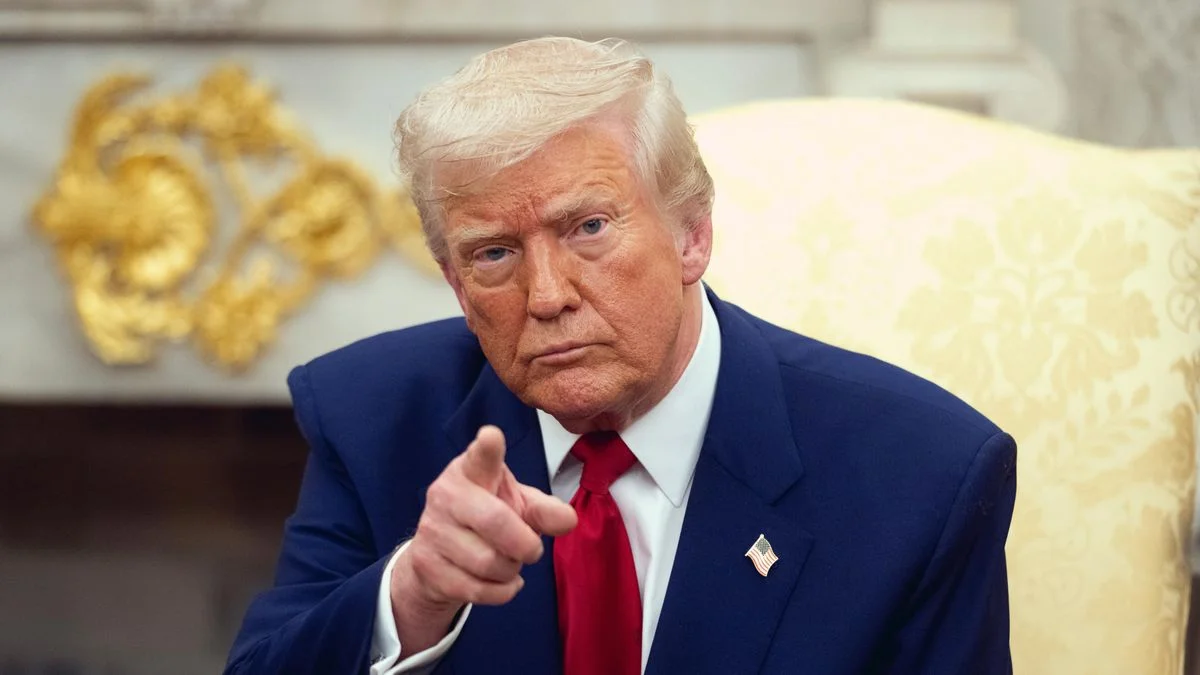
US President Donald Trump has called for interest rate cuts again to accelerate economic growth. Describing Fed Chairman Jerome Powell as a "big loser," Trump argued that if interest rates are not cut immediately, the economy could slow down. According to Trump, now is the time for quantitative easing.What is Trump Saying?Trump lashed out at Fed Chairman Powell in his latest statement with very harsh terms. Reminding us that the European Central Bank has cut interest rates seven times this year, he claimed that the US is lagging behind. Trump, who particularly implies that interest rate moves made during election periods have political purposes, has the following prominent messages:Things are going well in customs negotiations.The US will make a lot of money from this process.Inflation is under control and is almost at zero.Interest rate cuts have now become inevitable.How Will Quantitative Easing Affect the Market?Trump's call for a rate cut actually sends a clear signal to the markets: Quantitative easing. Such policies usually mean more liquidity in the markets. As a result:It may create effects such asUpward movements in stock markets,Increase in demand for risky assets,A new wave of rise in cryptocurrencies. This call, especially made at a time when the US is entering an election atmosphere, may signal an early bull period to the markets.Will the Fed Respond to Trump's Call?The Fed, chaired by Jerome Powell, has been taking cautious and careful steps recently. However, with the permanent decline in inflation and signals of a possible slowdown in economic growth, it may open the door to interest rate cuts. These statements by Trump will increase public pressure on the Fed.Is It the Beginning of a New Era for the Markets?Trump's interest rate cut request means much more than a political statement. The desire for monetary expansion behind this call may bring a positive atmosphere to the markets. However, the response the Fed will give will be the most critical factor in determining how financial markets will shape in the coming period.