The temporary ceasefire announced between the US and Iran quickly led to a sharp reversal in the crypto markets. The two-week "bilateral ceasefire" announced by US President Donald Trump reversed the bearish expectations that had intensified in recent days, causing Bitcoin to rapidly rise to $72,700. This sudden movement also triggered a significant short squeeze in the markets. According to data shared by the crypto data platform CoinGlass, a total of $595 million worth of positions were liquidated, with the majority being short positions.
The liquidation of approximately $427 million worth of short positions clearly demonstrates the intensity of bearish expectations in the market. In particular, in recent weeks, geopolitical risks and increasing uncertainty had led a large portion of investors to take bearish positions. This sharp rise was not limited to Bitcoin. Ethereum gained approximately 6% on the same day, while XRP rose 5% and Solana 5.5%. The overall crypto market recorded a daily increase of around 4%.
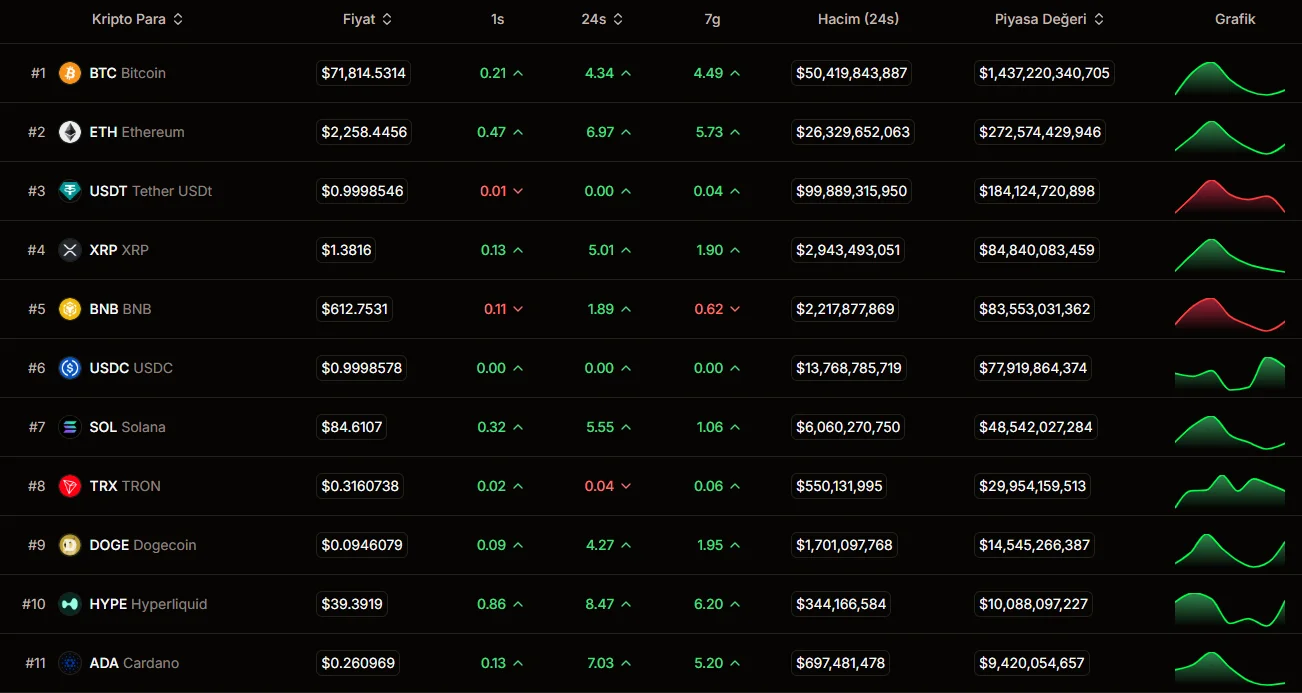
On the other hand, the majority of liquidations occurred in a relatively short period. Approximately $508 million of the total $595 million liquidation took place in just 12 hours, with $398 million of that coming from short positions. This marked the most aggressive short squeeze since the beginning of March. The largest single liquidation occurred on Binance. Approximately $11.79 million worth of BTC-USDT short positions were liquidated in a single transaction, with Bitcoin leading the list with a total liquidation of $245 million.
Ethereum came in second with $126 million, while altcoins like Solana, ZEC, and XRP also felt the effects of this wave. The impact of the ceasefire decision was not limited to cryptocurrencies. Oil prices also saw a sharp decline. Brent oil fell to around $99, and WTI to $95, indicating a rapid normalization in energy markets that had previously risen due to the war-related "risk premium." This situation also led to significant liquidations in tokenized commodity contracts.
The agreement is valid for two weeks
From a market sentiment perspective, one of the key factors behind the rise was overly pessimistic positioning. While the "fear and greed index" remained in single digits during the war, negative expectations dominated social media. The ceasefire news broke this one-sided expectation, sharply reversing the market. However, experts are cautious about whether this rise will be permanent.
According to analysts, a two-week temporary ceasefire is not enough to start a long-term bull market. For a sustained rise, not only is a reduction in geopolitical risks needed, but also an improvement in global liquidity conditions, a strengthening of expectations for interest rate cuts, and continued corporate capital inflows are required.