Bitcoin
This page lists the latest Bitcoin news and market analysis. Browse articles, expert insights, and updates in this category on JrKripto. Stay informed with in-depth coverage of cryptocurrency trends and developments.
News
Bitcoin News
Browse all Bitcoin related articles and news. The latest news, analysis, and insights on Bitcoin.
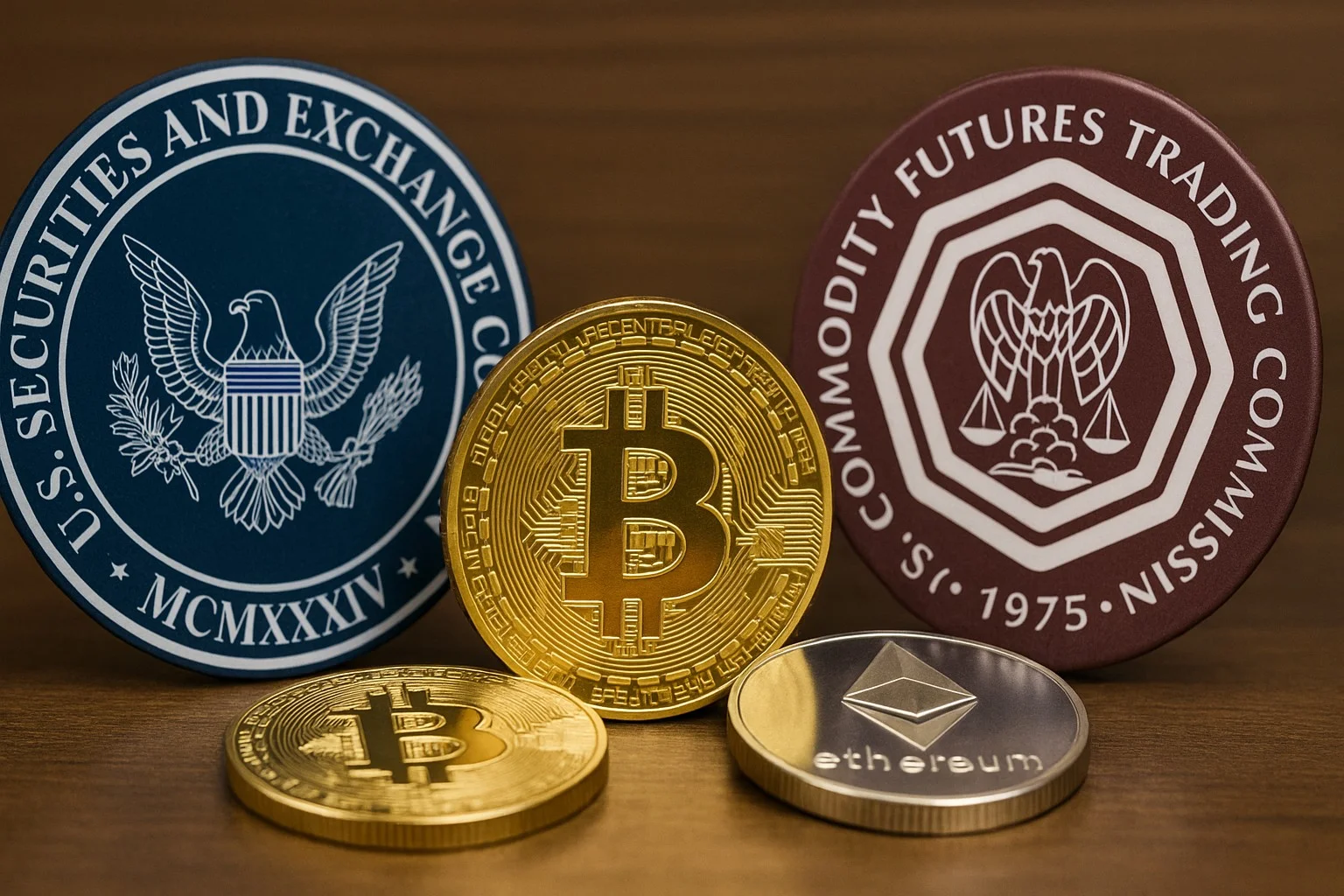
The two major US market regulators, the Securities and Exchange Commission (SEC) and the Commodity Futures Trading Commission (CFTC), have issued a joint statement of critical importance for financial markets. The statement, signed by SEC Chairman Paul S. Atkins and CFTC interim Chair Caroline D. Pham, aims to usher in an "era of harmonized regulation," particularly for crypto assets and next-generation financial products.Regulatory harmonization emphasizedThe statement emphasized that the securities and commodity derivatives markets are increasingly intersecting, making it imperative for both institutions to act together. Officials acknowledged that a lack of coordination in the past created "regulatory gaps" and slowed innovation, and announced that this era is now over. Atkins and Pham stated, "Today is a new beginning. The uncertainties that hindered innovation in US markets are history. The SEC and CFTC will act in concert from now on."Will a clear roadmap be released for crypto assets?The two institutions' statement highlighted the joint staff memorandum on spot crypto asset products as a first step. Furthermore, the main areas planned for future harmonized regulation were listed as follows:24/7 Markets: Expanding trading hours in US markets will be discussed, in addition to assets that are currently traded continuously, such as crypto and foreign exchange.Event Contracts: Clarifying investor access to these products, particularly given the growth of prediction markets, is on the agenda.Perpetual Contracts: The possibility of offering future-free derivative products, popular on offshore crypto exchanges, under US regulation may be paved.Portfolio Collateralization: The plan is to increase capital efficiency by netting participants' positions across different markets.DeFi and Innovation Exceptions: Creating safe harbors for decentralized finance protocols is considered critical to keeping innovation in the US.A joint roundtable meeting will be held on September 29.The SEC and CFTC will formalize the process with a "compliance and innovation" roundtable meeting to be held on September 29, 2025. At this meeting, both industry representatives and public authorities will discuss the details of harmonized regulation.The officials aim to re-entice innovative financial products that have been relocated outside the US due to fragmented and contradictory regulations. The statement stated, "For many years, the US was a center of financial innovation. However, recently, products and initiatives have shifted abroad. We are determined to reverse this trend."Judging by the tone of the statement, the two agencies' shared goal is not only to regulate cryptocurrency markets but also to reassert the US's leadership in global financial innovation. The regulators indicate that a clearer, more predictable, and more innovative framework will be created without compromising investor protection and market integrity.

Critical nonfarm payrolls and unemployment data from the US have stimulated both traditional markets and the crypto ecosystem. The employment figures, which fell well below expectations, and the rise in the unemployment rate have investors focused on the Fed's interest rate decision, which will be announced in September.Employment data surprisesThe US Bureau of Labor Statistics (BLS) announced that nonfarm payrolls increased by only 22,000 in August. This figure fell well short of the market expectation of 75,000. The previous month's employment gain was 73,000. This result marked the second-lowest employment data since July 2021.Meanwhile, the unemployment rate was announced at 4.3%. While this figure was in line with expectations, it was above the 4.2% reported the previous month. Average hourly earnings, at 3.7%, came in slightly below expectations.This weak data release reinforced expectations that the Fed will cut interest rates in September. Analysts agree that the weakening labor market will make it difficult for the Fed to maintain its tight monetary policy.Criticism of the BLSShortly before the release of the labor force data, it was reported that the BLS was experiencing technical issues. Revisions made in recent months and inconsistencies in the released data have sparked debate about the agency's credibility. US Commerce Secretary Lutnick recently stated that "the BLS needs new management," adding to the criticism of the agency.Crypto markets gain momentumThese data, released at a time of intense macroeconomic uncertainty, have had a positive impact on the crypto markets. Bitcoin (BTC), in particular, strengthened from the $108,000 support level to test $113,000. At the time of writing, the BTC price is trading around $112,700. Ethereum (ETH) and many altcoins have also found support in Bitcoin's momentum. Analysts note that a Fed interest rate cut could trigger a broader upward trend in crypto markets. A low interest rate environment could trigger increased capital flows into cryptocurrencies by increasing demand for risky assets.The September Effect and Fed ExpectationsHistorically, September is known for its bearish trend in crypto markets. However, this year's scenario could be different. A Fed rate cut signal could disrupt the traditional "September nightmare" in the market.Fed Chair Jerome Powell highlighted the weakening labor market in his Jackson Hole meeting last month. The figures released today confirm the risks Powell highlighted, making the possibility of a rate cut at the September meeting virtually certain.

Thumzup Media Corporation (TZUP), backed by Donald Trump Jr., has made a rapid entrance into the cryptocurrency market. In its latest shareholder letter, the company announced that it has purchased $1 million in Bitcoin and has also authorized investments in cryptocurrencies such as DOGE, LTC, SOL, XRP, ETH, and USDC. This move is part of Thumzup's plan to transform from a mere media and advertising technology company into a major player in crypto mining.Starting with 2,500 Dogecoin minersThe company announced that it has signed a definitive acquisition agreement with Dogehash Technologies, a Dogecoin mining company. As part of this acquisition, Thumzup is adding 2,500 mining devices and plans to take delivery of an additional 1,000 by the end of the year. This fleet of 3,500 devices aims to make Thumzup one of the leading Dogecoin miners in North America. According to the company's calculations, at the current DOGE price of $0.22, this operation could generate approximately $22.7 million in annual revenue. If the price rises to $0.50, revenue could exceed $51.6 million, and if it rises to $1, it could exceed $100 million. $50 Million Capital IncreaseTo support this growth plan, Thumzup issued $50 million worth of shares in August 2025. This transaction, priced at $10 per share, strengthened the company's balance sheet and facilitated strategic partnerships with crypto finance experts such as Dominari Securities. The company currently holds more than $50 million in cash on its balance sheet.A New Vision with a "Crypto Treasury Strategy"Thumzup's board of directors plans to incorporate various crypto assets, in addition to Dogecoin, into its long-term treasury strategy. This could include Bitcoin, Ethereum, Solana, XRP, Litecoin, and USDC. Additionally, thanks to its agreement with Coinbase Prime, the company gained access to Bitcoin-backed loans and institutional-grade custody services.From ad tech to crypto miningThumzup was originally active in social media advertising when it went public on Nasdaq last year. It had developed a platform that allowed Instagram and TikTok users to generate revenue directly from brands. However, the company's focus on crypto demonstrates its shift beyond this business model and the adoption of a completely different growth strategy. Nevertheless, Thumzup emphasized that its ad tech business is growing steadily and that new subscription models are being developed.Heavy competition in Dogecoin miningThe crypto mining sector is rapidly growing. Currently, more than 40 publicly traded crypto mining companies are operating. Leading companies include MARA Holdings ($5.6 billion market capitalization), CleanSpark ($4.5 billion), and Riot Platforms ($3 billion). Thumzup's goal is to become a leader in this competitive market focused on Dogecoin. The company cited the Donald Trump administration's vision of "making the US the crypto capital," stating that it has both US political support and investor interest behind it.

Japan is preparing new and stricter regulation for the cryptoasset market. The country's financial regulator, the Financial Services Agency (FSA), published a report proposing that cryptocurrencies be removed from the current Payment Services Act and regulated under the Financial Instruments and Exchanges Act (FIEA). This step aims to place crypto assets more in the same category as securities and strengthen investor protection.A clear message from the FSA: "Crypto issues are similar to securities"The report noted that many of the problems experienced in the crypto market are similar to those encountered in the securities market for years. The main problems highlighted by the FSA were vague white papers, inaccurate or incomplete information, unregistered activities, fraud cases, low risk tolerance, and exchange security vulnerabilities.Therefore, the agency stated that it would be appropriate to apply the same oversight and enforcement mechanisms currently offered by the FIEA to crypto. However, it should be noted that this report is not yet binding. The document in question is a draft of an idea submitted by the FSA secretariat to the Financial System Council. The final decision will be made by the government.Crypto on the rise in JapanThe report also highlights the growing economic importance of crypto assets in Japan. The total number of accounts opened on crypto exchanges in the country has surpassed 12 million. The total value of user deposits has exceeded 5 trillion yen (approximately $33.7 billion). This figure means that nearly one in 10 people has a crypto account.Meanwhile, the vast majority of investors in Japan engage in small-scale transactions. More than 80% of individual accounts have balances below $675. Furthermore, 70% of crypto investors are middle-income earners, and 86% are investing with the expectation of long-term price appreciation.Supportive messages from the governmentJapanese Finance Minister Katsunobu Kato also drew attention last month by stating that crypto assets could be included in diversified portfolios. While acknowledging high volatility, Kato emphasized that with proper regulations, the crypto market could become a safe haven for investors.What new rules might entail?If crypto is included in the FIEA:Issuers will be required to disclose detailed information in public offerings and secondary market transactions, similar to securities.Brokerage firms and brokers will be subject to stricter licensing and oversight.Strict measures will be implemented against unfair transactions and manipulation.Courts will be able to issue swift injunctions and preliminary injunctions against unregistered activities.

All eyes are on the US labor market this week. The ADP Employment Change report, which measures private sector employment, is expected to show that 68,000 new jobs were created in August. The data, to be released on Thursday, could directly impact not only the employment landscape but also the interest rate decision of the Federal Reserve (Fed), the US central bank. The data is expected to be released around 3:30 PM Turkish time.A critical threshold after July's shockWeak nonfarm payrolls (NFP) data released in July shook markets, sharply depressing the dollar and raising questions about the Fed's ability to maintain its tight monetary policy. The unexpected decline even led to the dismissal of a senior official at the Department of Labor. Therefore, investors will be more sensitive to the ADP's projections.Expectations point to a job gain of only 68,000 in August, following a 104,000 increase in July. This downward trend could reinforce signs of a cooling in the US economy.Fed and Trump PressureThis data will be the final employment report before the FOMC meeting on September 16-17. Chairman Jerome Powell had signaled that inflation is relatively easing and the impact of trade tariffs will be limited. This has increased the likelihood of a rate cut.Meanwhile, President Donald Trump continues to harshly criticize the Fed for cutting interest rates more rapidly. According to data from the CME Group's Fed Watch Tool, markets are pricing in a 25 basis point rate cut in September at over 90%. A second cut before the end of the year is also a possibility.If the ADP data falls short of expectations, the Fed could consider a more aggressive rate cut. In this scenario, selling pressure on the US dollar could intensify. Conversely, while stronger-than-expected data may support the dollar in the short term, it appears unlikely the Fed will change its policy direction on its own. Markets will be determined by the nonfarm payrolls (NFP) data, to be released on Friday.How might cryptocurrencies be affected? Labor market data is also indirectly critical for cryptocurrency markets. A Fed interest rate cut could suppress the value of the dollar and increase the appetite for risky assets. This could strengthen liquidity flows in cryptocurrencies, particularly Bitcoin and Ethereum. However, very weak data could increase concerns about an economic slowdown and reduce risk appetite. In such a scenario, crypto markets could also be negatively affected by volatility.Ultimately, the ADP report will shape both the Fed's short-term roadmap and global market risk appetite. On the crypto side, the impact will be felt not directly, but through the dollar's course and investor psychology.

Institutional buying appetite is once again in the cryptocurrency markets. Prominent transactions in the last week of August witnessed billion-dollar movements in both Ethereum and Bitcoin. Leading names such as Ether Machine, Bitmine, MicroStrategy, and SharpLink bolstered their portfolios with massive acquisitions.Ether Machine and Citigroup SupportEther Machine acquired an additional 150,000 Ethereum in August. This move, equivalent to approximately $654 million at today's prices, attracted attention in the market. Citigroup's spearheading of a third financing round for the company worth at least $500 million is also noteworthy. The interest shown by institutional capital in Ethereum treasury companies is a critical development.Bitmine's ETH holdings reach 1.8 millionLast week, Bitmine announced the purchase of 153,075 ETH, bringing the company's holdings to 1.866 million. Bitmine's portfolio also includes 192 BTC and $635 million in cash reserves. Total assets have reached approximately $8.9 billion, making Bitmine one of the strongest Ethereum treasury companies in the market.MicroStrategy Doesn't Stop at BitcoinIn addition to its massive Ethereum acquisitions, MicroStrategy is also attracting attention in the Bitcoin market. Last week, the company purchased an additional 4,048 BTC. With the purchase, which was made at an average price of $110,981, MicroStrategy's total Bitcoin holdings reached 636,505. The company's founder, Michael Saylor, remains committed to its Bitcoin strategy and continues to position BTC as "digital gold" at every opportunity.SharpLink's Ethereum MoveSharpLink (SBET), a prominent Ethereum-focused company, has also announced new acquisitions. According to a statement released by X, the company purchased 39,008 ETH at an average price of $4,531. This brings SharpLink's total ETH holdings to 837,230. This reserve, worth approximately $3.6 billion, further enhances the company's market influence. SharpLink also announced that it has earned 2,318 ETH staking rewards since the beginning of June. The company's ETH concentration has increased by 97 percent to 3.94, while more than $71.6 million in cash reserves have yet to be released.

Crypto investment products performed strongly in August, accelerating the inflow of fresh capital into the market. According to CoinShares' latest report, net inflows of $2.48 billion were recorded last week alone. This brings the August total to $4.37 billion, while inflows since the beginning of the year have reached $35.5 billion. However, due to the negative market price movement, total assets under management (AUM) declined by 10% to $219.8 billion.The Shadow of Macro DataFund inflows, which had been positive throughout the week, turned negative following Friday's release of US core PCE data. The underperforming data weakened the prospects for a September interest rate cut, limiting demand for digital assets. CoinShares Head of Research James Butterfill stated that this development was disappointing for investors.Regional Outlook: US Remains LeadingRegionally, the US market remains the leader with weekly inflows of $2.29 billion. $4.35 billion flowed into US funds throughout August. Switzerland, with $109.4 million, Canada, and Germany, with $41.1 million in inflows, were other prominent countries. Sweden, however, saw a notable weekly outflow of $45.2 million, bringing the total outflow to $253.2 million in August. This figure demonstrates the diversification of investor behavior across European countries.iShares Leads the Way Among Fund ProvidersiShares/USA was clearly the leading provider among investors' preferred providers. With $1.21 billion in inflows in just one week, iShares funds recorded net inflows of $4.09 billion for the entire August, maintaining their leadership position with a record $30.6 billion in inflows since the beginning of the year. ProShares and 21Shares, with $183 million and $102 million, respectively, were also prominent providers. In contrast, Fidelity (-$662 million), ARK 21Shares (-$621 million), and CoinShares XBT Provider (-$254 million) experienced significant outflows in August.Ethereum funds outperform BitcoinThe largest difference in terms of assets was seen on Ethereum. Ethereum funds recorded $1.42 billion in inflows last week, reaching a total of $3.96 billion in August. Bitcoin funds, on the other hand, experienced $301 million in outflows for the month, despite a weekly inflow of $748 million. Year-to-date, Bitcoin funds have seen total inflows of $20.8 billion, while Ethereum's has risen to $12 billion.Solana funds attracted attention with a weekly inflow of $177 million, while XRP funds gained $134 million. The movement in these two altcoins is linked to expectations for potential spot ETF approval in the US. Cardano ($10.4 million), Chainlink ($7.7 million), and Cronos ($4.5 million) also saw positive inflows, albeit limited, in August. In contrast, Sui recorded an outflow of $10.4 million. August was a strong month for crypto investment funds. Ethereum, in particular, has become a clear favorite among institutional investors, while Bitcoin's outflows signal a market shift. Increasing demand for altcoin funds like Solana and XRP suggests investors are diversifying. Regional differences, macroeconomic data, and Fed policies will be the most important factors shaping fund movements in the coming period.

The cryptocurrency market experienced sharp fluctuations over the weekend. Leading cryptocurrency Bitcoin (BTC) opened the week at $107,383, while Ethereum (ETH) fell to $4,385. Bitcoin then rose to $109,500, and Ethereum, from the bottom, rose to $4,460. So, what was behind the decline? Recent macroeconomic data, particularly from the US, dampened investors' risk appetite and increased selling pressure in the market.PCE data shook the crypto marketLast Friday's Personal Consumption Expenditures (PCE) inflation data was the main factor determining market direction. According to the data, core inflation rose by 2.9% year-on-year in July. This figure, which was in line with expectations, was the highest rate seen since February. The persistence of high inflation overshadowed expectations for an interest rate cut expected in September. Presto Research analyst Min Jung said, “A sell-off in the crypto market has intensified following the PCE data. Investors are pricing in the possibility of the Fed postponing its interest rate cut.”Whales are sellingIn addition to the pressure created by the macro data, large-scale Bitcoin wallet sell-offs have also pushed prices down. Kronos Research CIO Vincent Liu noted that recent whale sell-offs have led to the liquidation of leveraged positions, saying, “The $100,000 level stands out as critical psychological support for Bitcoin. If this level is broken, a broader liquidity squeeze could occur in the market.”Liu also emphasized that $4,000 is a critical threshold for Ethereum. He warned that if it falls below these levels, the crypto market could face a much sharper correction.Altcoins also under pressureNot only Bitcoin and Ethereum, but also leading altcoins, have lost value. XRP fell 3.67% to $2.73, while Solana (SOL) retreated 2.71% to $198.6. The broader market was in the red as investors averted risk. However, at the time of writing, a partial recovery was underway. Current prices:XRP (XRP): $2.79BNB (BNB): $865.17Solana (SOL): $202.78Dogecoin (DOGE): $0.216TRON (TRX): $0.341However, the last 7-day performance remains negative: XRP is down 4.79%, and ETH is down 2.77%. All Eyes on Nonfarm Payrolls and the FedInvestors are now on the radar for this week's Nonfarm Payrolls (NFP) data. A strong labor market performance could support the Fed's tight stance and create further selling pressure in the crypto market. Weak data could boost demand for riskier assets, triggering a recovery in Bitcoin and Ethereum.The Fed's highly anticipated interest rate decision will be announced at the FOMC meeting on September 16-17. According to CME FedWatch Tool data, markets still expect a 25 basis point rate cut with an 87.6% probability. However, high inflation could lead to a reshaping of these expectations in the coming days.The cryptocurrency market is on edge due to both macro data and on-chain movements. Whether Bitcoin can maintain its $100,000 support level and Ethereum's $4,000 support level will determine short-term direction. The next two weeks are crucial for market participants due to both employment data and the Fed meeting.

Spot Ethereum ETFs in the US are poised to close August with net inflows exceeding $4 billion. Meanwhile, Bitcoin ETFs are on track to close the month with net outflows this time, following their strong performance in previous months.Ethereum's RiseAccording to market data, spot Ethereum ETFs recorded net inflows of approximately $4 billion in August. This figure was the second-highest monthly performance for Ethereum funds, following the $5.4 billion record set by Ethereum funds in July. This trend, which accelerated since July 17th, paralleled the sharp rise in the price of Ethereum. While ETH had been in a year-to-date loss against BTC until mid-July, it quickly gained a 13.8% return advantage. The chart over the last six weeks is particularly striking: Bitcoin ETFs outperformed Ethereum ETFs for only seven days during this period. In terms of net inflows, Bitcoin funds recorded $505 million in inflows during the same period, while a total of $7.1 billion flowed into Ethereum funds. Headwinds for BitcoinBitcoin ETFs maintained their lead in July with $6 billion inflows. However, things reversed in August. According to current data, $622.5 million in outflows from Bitcoin funds occurred during the month. This marks Ethereum products' largest monthly lead since they began trading in July 2024.A look at the cumulative figures for the last two months reveals that Ethereum ETFs led with $9.5 billion in net inflows. Bitcoin funds recorded $5.4 billion in inflows during the same period. However, from a long-term perspective, it's worth noting that Bitcoin products still hold a clear lead: BTC ETFs topped the list in cumulative inflows at $54.6 billion, while Ethereum products remained at $13.7 billion. This is largely due to the fact that Bitcoin funds launched earlier, with a six-month advantage.The seven-day daily inflow lead for Ethereum ETFs ended on August 28. That day, $178.9 million inflows into Bitcoin ETFs, while $39.1 million inflows into Ethereum funds were particularly notable. Ark Invest's ARKB fund attracted $79.8 million in inflows. BlackRock's IBIT fund received $63.7 million in inflows. On the Ethereum front, BlackRock's ETHA product led the way with $67.6 million.Bitcoin ETFs still lead in trading volume. However, daily volumes for Ethereum funds are gradually approaching. On August 28, ETH ETFs generated $2 billion in volume, while BTC funds reached $2.5 billion.Timothy Misir of BRN Research notes that ETF demand continues to absorb more than twice Bitcoin's daily supply. However, he states that BTC remains stuck around $111,000, suggesting a neutral outlook for the market. On the Ethereum side, a drop below the $4,500 support is considered a sign of short-term weakness.

Eric Trump, the second-eldest son of US President Donald Trump, described China as "an incredible force in the crypto industry" during his speech at the Bitcoin Asia conference in Hong Kong. Despite China's strict crypto bans, Eric Trump emphasized the influence of both Hong Kong and China on the crypto world.China and Hong Kong's RoleEric Trump acknowledged China's importance in the crypto world during a conversation with David Bailey at Bitcoin Asia. In response to Bailey's comment that "China is another Bitcoin superpower next to the US," Eric Trump replied, "You've become a very significant force in this world, and you're doing it really well."Yet, China banned institutional crypto trading in 2017 and declared crypto transactions completely illegal in 2021. Despite this, individual crypto ownership remains legal, and peer-to-peer transactions remain in a gray area. Furthermore, despite China's ban on Bitcoin mining, mining is known to continue in some regions. Hong Kong, by contrast, continues to open up space for crypto as a regulated pilot region under China's shadow.Praise for the Middle East and South AmericaEric Trump highlighted not only China but also the Middle East. Stating that the region has embraced crypto "massively," Trump praised the passion shown by some smaller countries in South America for the sector. However, he singled out his country, saying, "The US is winning the digital revolution right now."Trump Family and Crypto ConnectionThe Trump family's interest in crypto is growing. During President Donald Trump's term, the US passed stablecoin legislation, established a strategic Bitcoin reserve, and declared its goal of making the country a global "crypto hub." During his speech in Hong Kong, Eric Trump introduced his American Bitcoin initiative, a joint venture with Hut 8. He also mentioned his advisory role at the DeFi project World Liberty Financial and the Japanese Bitcoin treasury company Metaplanet.Eric Trump attributed his entry into crypto to the Trump family's exclusion from banks during the Biden administration: "If the banks hadn't closed our family's accounts, I might not be here today. That's how I got into crypto." Bitcoin prediction: $1 millionEric Trump, noting that he has increased his interest in crypto on a personal level, said he spends 90% of his time in the crypto community. He also made a bold price prediction for Bitcoin: “I believe Bitcoin will reach $1 million in the coming years. Buy now, hold long-term, never sell. This is the best asset in the world.”Bitcoin, meanwhile, is trading at $108,000 at the time of writing. Having fallen 2.6% in the last 24 hours, the leading cryptocurrency remains 12% below its historic high of $124,500, reached on August 14. US-China dialogue and BitcoinEric Trump also pointed to the planned summit between US President Donald Trump and Chinese President Xi Jinping. The aim is to ease relations strained by US global trade tariffs. Trump indicated that Bitcoin could also be on the agenda during this meeting, but he tempered expectations, saying, “They’ll probably have bigger things to talk about.”

Bitcoin (BTC), the leading cryptocurrency, broke a record high in mid-August, surpassing $124,000. However, following this surge, the market has refocused on macroeconomic developments. The US Federal Reserve's (Fed) interest rate policies and released economic data, in particular, play a significant role in determining price action. According to the latest data, Bitcoin is currently trading at $109,782.62 and has declined 2.46% in the last 24 hours. Fed rate cut expectations postponed until SeptemberAfter the interest rate cuts expected in June and July failed to materialize, attention shifted to September. Fed Chair Jerome Powell recently offered mild signals regarding monetary policy at his Jackson Hole meeting. Powell emphasized that the balance of risks has shifted and suggested that the current restrictive stance may require adjustments in the future. This statement has strengthened the market's interest rate cut prospects.Indeed, futures expectations have also become clearer. Markets are pricing in an 85% probability of a Fed rate cut in September. This expectation is also seen as supporting risk appetite in cryptocurrency markets.PCE data came in line with expectationsThe Personal Consumption Expenditures (PCE) price index, known as the inflation indicator most closely followed by the Fed in its monetary policy decisions, was released for July.Core PCE (Annual): 2.9% (expected 2.9%, previous 2.8%)Core PCE (Monthly): 0.3% (expected 0.3%, previous 0.3%)PCE Price Index (Annual): 2.6% (expected 2.6%, previous 2.6%)PCE Price Index (Monthly): 0.2% (expected 0.2%, previous 0.3%)The data came in line with expectations, indicating that inflation in the US is progressing in a controlled manner. The fact that annual core inflation remained stable at 2.9% is a development to be closely monitored by the Fed. Consumption and incomes on the risePCE data reflects not only price movements but also trends in consumption and income. Nominal personal consumption increased by 0.5% in July, accelerating compared to the previous month. Real personal consumption expenditures also rose by 0.3%. This suggests that American consumers continue to increase their spending despite inflation.Meanwhile, personal income increased by 0.4% in real terms. This figure supports consumption trends and could influence the Fed's decisions. However, the widening trade deficit to $103.6 billion in July signaled weakness in other areas of the economy.What's next for Bitcoin?Losses in short-term interest rate futures contracts eased following the release of macroeconomic data. Investors are focused on the possibility of a September interest rate cut. This development could keep interest in risky assets alive. However, Bitcoin's decline below $110,000 in the short term suggests investor caution.

Crypto markets are preparing for sharp volatility today. A total of $14.6 billion in Bitcoin and Ethereum options contracts for August are expiring at the end of the day. Because it's the end of the month, today's expiration is significantly higher than in previous weeks.$11.47 Billion in Options on BitcoinAccording to Deribit data, $11.47 billion in options contracts are expiring for Bitcoin alone. There are a total of 102,598 options contracts, and the Put/Call ratio, which reflects the balance between puts and calls, is 0.78. This ratio signals a cautious but generally optimistic outlook in the market. The "maximum pain" level for Bitcoin options today is set at $115,000. This means that most investors will experience the greatest losses when the price approaches this level. Therefore, the expiration of options could push prices towards this critical point. $3.1 billion in Ethereum options contracts are expiring.On the Ethereum side, $3.137 billion in options contracts are expiring. The total number of open interest is 697,419, and call options clearly dominate. The put/call ratio is at 0.77, indicating that investors are more bullish on ETH.The "maximum pain" level for Ethereum is $3,800. This price range could put pressure on ETH upon expiration. Analysts note that Ethereum options offer a weaker outlook compared to Bitcoin, and that upside expectations are limited.Nvidia Effect: Could Markets Experience Extra Volatility?As the option expiration approaches, the main debate in the market is how Nvidia's strong earnings results, announced on Wednesday, will impact cryptocurrencies. According to analysts, the company's massive earnings have triggered volatility in traditional markets, and this impact is likely to spill over into Bitcoin and Ethereum. According to markets data, Nvidia's implied volatility (IV) is at 100%, with a 7% price movement expected. The main question on crypto investors' minds is: "Will Bitcoin move in line with traditional markets due to Nvidia's influence, or is it now sufficiently independent?"Expected Market ScenarioAs of today, Bitcoin is trading at $109,561, while Ethereum is at $4,4300. Consequently, crypto markets are poised for a volatile time today due to both the high volume of options expiration and the Nvidia influence. Investors will be watching closely to see whether Bitcoin will approach $115,000 or enter a stronger uptrend despite the options pressure.

The US government has decided to stream its macroeconomic data directly to the blockchain for the first time. According to the US Department of Commerce's announcement, critical data such as Gross Domestic Product (GDP), Personal Consumption Expenditures (PCE) Index, and US domestic demand strength have been made accessible on-chain thanks to Chainlink's oracle infrastructure. This development is considered a historic milestone in the distribution of public data on the blockchain.Data to be Published on 10 Different NetworksAccording to the Ministry's statement, economic indicators will initially be published on 10 different blockchain networks: Arbitrum, Avalanche, Base, Botanix, Ethereum, Linea, Mantle, Optimism, Sonic, and ZKsync. This data, securely transmitted via Chainlink Data Feeds, will be updated monthly or quarterly. This will allow markets to track macroeconomic indicators in a transparent and immutable format on-chain. Meanwhile, the US government recently shared GDP data on Bitcoin, Ethereum, Solana, TRON, Stellar, Avalanche, Arbitrum, and Polygon. This approach demonstrates the government's growing interest in blockchain technology.Chainlink's rise and market impactLINK, Chainlink's (LINK) native token, gained over 5 percent in value following the announcement of this partnership. In the eyes of investors, this integration with the US government enhances Chainlink's credibility and proves that oracle solutions can also play a role in state-sponsored applications.Chainlink has previously collaborated with major institutions such as BNP Paribas and SWIFT, playing a key role in cross-chain asset transfer tests. Chainlink's Cross-Chain Interoperability Protocol (CCIP) infrastructure was used in the trials conducted with SWIFT, and this was highlighted as a critical step in the tokenization process. Paving the way for next-generation applicationsAccording to experts, the US's move to on-chain data could create new opportunities for decentralized finance (DeFi) applications. For example, lending protocols could adjust interest rates based on GDP data, or inflation expectations could be reflected more transparently through PCE index-based prediction markets. Furthermore, automated trading strategies and new asset types based on tokenization could be among the infrastructures that will feed into this data.Chainlink has recently attracted attention not only for its technical collaborations but also for its policy engagements. The company announced that it is negotiating with the US Securities and Exchange Commission (SEC) on broker-dealer and transfer agent regulations and is also contributing to legislative initiatives such as the GENIUS Act.The US Department of Commerce released a statement regarding PYTHThe US Department of Commerce's statement emphasized that the Pyth Network will play a key role in the secure and transparent distribution of economic data on-chain. Following extensive collaboration with Secretary Howard Lutnick, Pyth's official participation in this initiative is considered a significant step in the public sector's adoption of decentralized infrastructure. The company stated that this development strengthens Pyth's position as a trusted data provider and has achieved nationwide approval.

Tether, the world's largest stablecoin issuer, announced on August 28th that it will launch its USD₮ (USDT) stablecoin directly on the Bitcoin network. This move makes USDT the first major stablecoin to exist natively on Bitcoin. First Native Stablecoin on BitcoinTether's chosen technology for integration is the RGB protocol, which launched on the mainnet this month with version 0.11.1. RGB is built on Bitcoin's Taproot framework and enables the private, scalable, and user-controlled issuance of digital assets. This will enable USDT transactions to be processed more lightweight, faster, and with greater privacy on the Bitcoin network.The company's CEO, Paolo Ardoino, stated, "Bitcoin deserves a lightweight, private, and scalable stablecoin that feels truly native." According to Ardoino, this integration will both strengthen Bitcoin's use as a payment network and expand USDT's reach. Both Bitcoin and USDT in the Same WalletThanks to RGB integration, users will be able to store and transfer Bitcoin and USDT in the same wallet. This will make stablecoin transactions more convenient and help Bitcoin transcend its role as a mere "store of value." Furthermore, the offline transactions supported by the protocol will provide flexibility and resilience across different payment environments.This development could pave the way for Bitcoin to be used more effectively not only for investment purposes but also as a means of daily payment.USDT's Huge Market ShareTether is currently the market's most dominant stablecoin, with a USDT supply of over $167 billion and a daily trading volume of approximately $118 billion. Used across a wide range of platforms, from centralized exchanges and DeFi platforms to cross-border payment systems and OTC desks, USDT stands out as the crypto market's primary liquidity tool.The migration of USDT to the Bitcoin network is quite exciting, as it represents the convergence of the market's most secure and decentralized blockchain with the most liquid stablecoin. This alliance could create new opportunities, particularly for institutional investors, payment providers and global financial actors.

A Bitcoin whale, who had been quiet in the crypto markets for a long time, returned to the spotlight with a large transfer on August 27th. According to on-chain data, the whale moved 750 BTC (approximately $83 million) to the Binance exchange. This move was the latest in a series of "old wallet" transactions that particularly increased over the summer months.Purchased 12 years ago at $332According to information shared by Lookonchain, the Bitcoins in question were purchased in 2013, when the BTC price was just $332. Compared to today's prices, this sale represents a return hundreds of times greater for the whale. Analysts believe this wallet owner first began selling after Bitcoin surpassed $90,000 in December 2024 and has been gradually withdrawing BTC since then. According to the shared data, the whale has sold 1,750 BTC to date, with an average sale price of $108,160. The profit has reached approximately $550 million. In other words, the 5,000 BTC asset, worth $1.66 million 12 years ago, has gained 331 times its value today.The wallet still holds a massive BTC reserveFollowing the transfer, the whale still has 3,250 BTC (approximately $361 million) in its wallet. According to data from on-chain analytics firm Arkham, the address "bc1q5…9mfcm" where the transaction took place still holds 750 BTC. Another related wallet, "bc1ql…ltg6ym," also holds 2,500 BTC.The addresses used by the whale are in the Bech32 format, introduced with Bitcoin's SegWit upgrade. This format is considered more secure and efficient than older addresses because it facilitates error detection and offers more advanced features.According to experts, whales' large transfers to exchanges do not always directly translate to selling pressure. Sometimes, such transactions are considered simply consolidation between wallets, security moves, or liquidity tests. However, assets transferred to major exchanges like Binance naturally attract investor attention and can create uncertainty in the market in the short term.In recent months, the revival of wallets that have been inactive for 10 years or more is particularly noteworthy. Miner wallets dating back to 2009-2010 and addresses of OG investors dating back to 2013-2014 have experienced repeated activity throughout the summer. This trend, along with Bitcoin approaching $100,000, raises the possibility of profit-taking for long-term investors.While high-volume wallet movements can increase volatility in the short term, they also make the supply-demand balance in the market more visible in the long term. Therefore, whale transfers remain a topic of discussion for analysts as well as traders.As of writing, Bitcoin price is trading around $111,100.