Bitcoin failed to hold its gains following the Fed’s decision and Chair Kevin Warsh’s remarks. After trading above $81,000 on the evening of October 28, the price fell below $80,000 on the morning of October 29. A subsequent recovery pushed it back above that level.
The Fed’s decision to leave its policy rate unchanged at 3.75%–4%, alongside Warsh’s message that officials would wait for more data, initially offered modest support to markets. However, Bitcoin gave back its earlier gains as selling intensified in the morning.
Bitcoin slipped below $80,000 in morning trading
Bitcoin rose to approximately $81,100 during Warsh’s press conference. Meanwhile, the U.S. two-year Treasury yield declined from 4.78% to 4.73%. Bitcoin continued trading above $81,300 after the U.S. session.
However, the price turned lower in the early hours of October 29. Morning data showed Bitcoin’s 24-hour trading range stretching from $79,636 to $81,698. The gap between the period’s highest and lowest prices therefore exceeded $2,000.
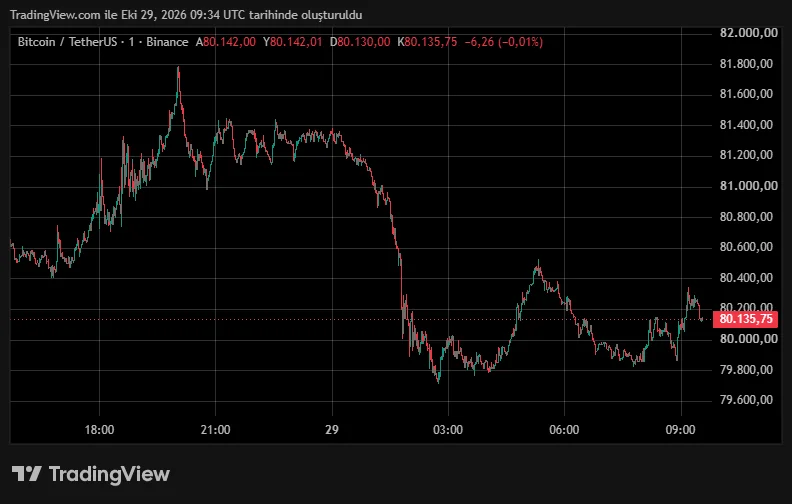
At approximately noon Turkish time, Bitcoin was trading at $80,152. Its 24-hour decline reached 1.54%. Although the price reclaimed the $80,000 threshold, it remained below the previous evening’s levels.
The chart also showed that the recovery following the sharp decline remained limited. Bitcoin approached $80,500 later in the morning before encountering renewed selling pressure. Trading subsequently concentrated around $80,000.
Fed holds rates steady as two officials favor a hike
The Federal Open Market Committee approved the rate decision in a 10–2 vote. Fed Governor Lisa Cook and Cleveland Fed President Beth Hammack favored a 25-basis-point increase.
The policy statement emphasized that economic activity was expanding at a strong pace while inflation remained elevated. The committee said additional information would help it determine the appropriate policy stance to return inflation to its 2% target. The October meeting therefore ended with a pause following September’s rate increase.
Warsh highlights changes in financial conditions
Warsh said financing conditions had tightened for some businesses and households since the September decision. He added that market participants had become more selective in allocating capital. However, he stopped short of describing overall financial conditions as “tight.”
The Fed chair offered a positive assessment of employment conditions. However, he stressed the importance of preventing rising energy prices from spreading to other parts of the economy. He said inflation expectations needed to remain anchored and reiterated officials’ readiness to act when necessary.
During the question-and-answer session, Warsh said the Fed’s policies were beginning to produce results. Still, he cautioned that officials had not yet reached firm conclusions. He said the data-rich period ahead would provide greater clarity for monetary policy.
December rate expectations remain in focus for crypto
The decision to hold rates steady did not signal a shift toward expectations of a rate cut. Immediately after the announcement, CME FedWatch data put the probability of a 25-basis-point increase in December at approximately 86%. That compared with around 78% a day earlier.
For the crypto market, the picture points to a modest price recovery alongside expectations of persistently high interest rates. Warsh’s wait-for-data approach provided short-term relief. Meanwhile, rising oil prices and continued inflation pressures remained among the factors limiting investors’ appetite for risk.