
A crypto asset’s price alone does not explain its economic model. The number of circulating tokens, who will receive the remaining supply, and their uses also matter. Tokenomics provides a framework for examining these factors together. Two projects using the same technology can experience different outcomes because of their distribution and incentive models. This guide explores the main elements of token economics, supply calculations, and what to consider when evaluating a project.
What Is Tokenomics, and What Does It Explain?
Tokenomics combines the words “token” and “economics.” It describes a crypto asset’s economic structure, from issuance and distribution to use. Supply rules, participant incentives, and decision-making authority all form part of this structure.
The basic principles of token economics
Understanding what a token is provides a useful starting point. A token is a digital asset created on an existing blockchain that can serve specific functions. However, tokenomics also describes the economic models of coins with their own networks. Bitcoin’s supply limit and halving mechanism fall within this broader scope.
Examining an economic model involves three main questions:
- How is the asset created, and who receives it?
- Why do users buy or hold the asset?
- Where do the incentives that sustain the system come from?
These questions help explain the structure behind price movements. However, tokenomics does not provide a method for calculating future prices with certainty.
Similarities to and differences from traditional economics
Supply, demand, incentives, and resource allocation also play central roles in traditional economics. Crypto economic models can manage some of these relationships through code and smart contracts. Distributed ledger accounting makes transfers and certain supply changes easier to track. However, economic decisions are not necessarily automatic or unchangeable.
Treating a token like a company share can also be misleading. Owning tokens does not automatically provide equity ownership or dividend rights. The scope of those rights depends on the project’s rules and applicable regulations. Economic expectations therefore need to be examined separately from the rights holders actually receive.
Supply, Distribution, and Token Unlocks
Cryptocurrency supply involves more than a single figure. The amount available in the market today may differ from the amount that could exist in the future.
Circulating supply, total supply, and maximum supply
Understanding supply data requires distinguishing three concepts:
| Concept | What does it describe? |
Circulating supply | The amount considered to be circulating in the market under the data provider’s methodology |
Total supply | The amount issued minus tokens permanently removed through burning |
Maximum supply | The theoretical upper limit under the protocol’s current rules |
Total supply can include locked tokens. Maximum supply may include tokens that have not yet been issued; some projects have no fixed cap.
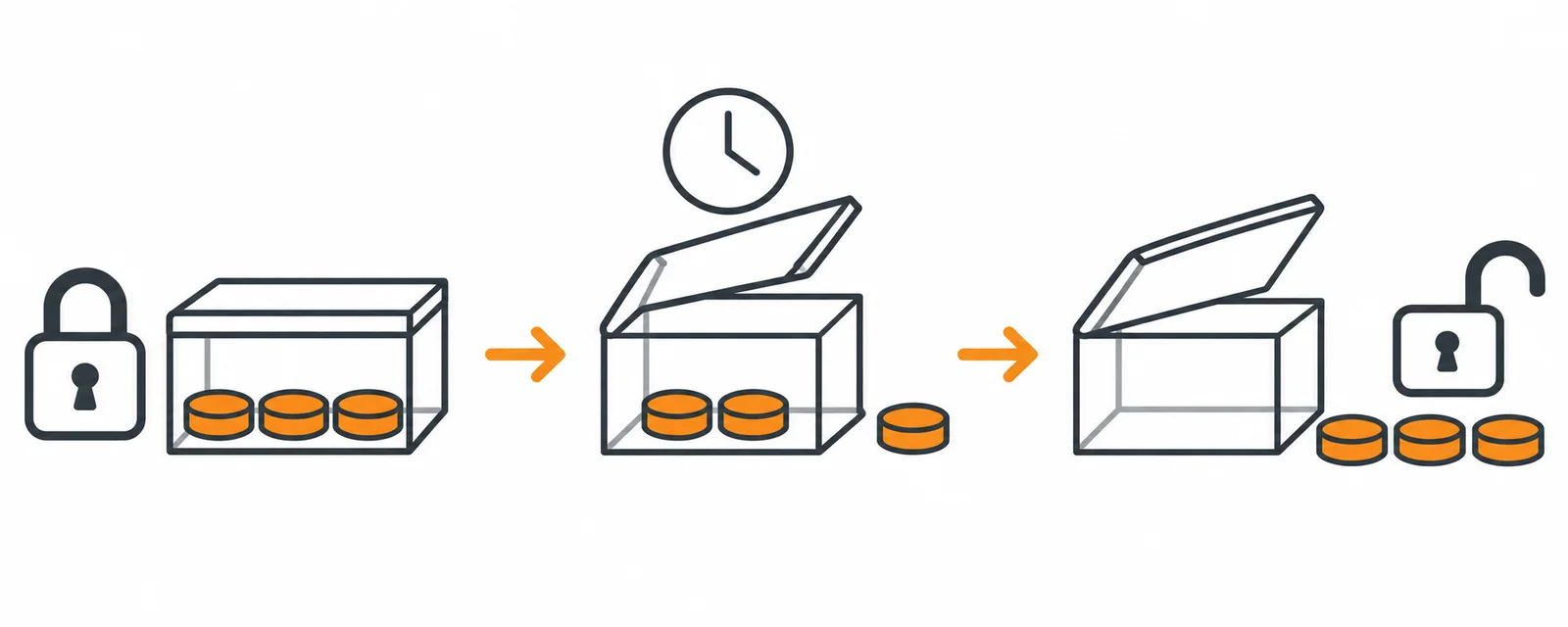
Therefore, stating that “the entire supply has been issued” does not mean every token is circulating. Some issued tokens may remain locked in team, investor, or treasury wallets. Data platforms may also define circulation differently. When making comparisons, check the date and calculation methodology behind each figure.
Token allocation and vesting schedules
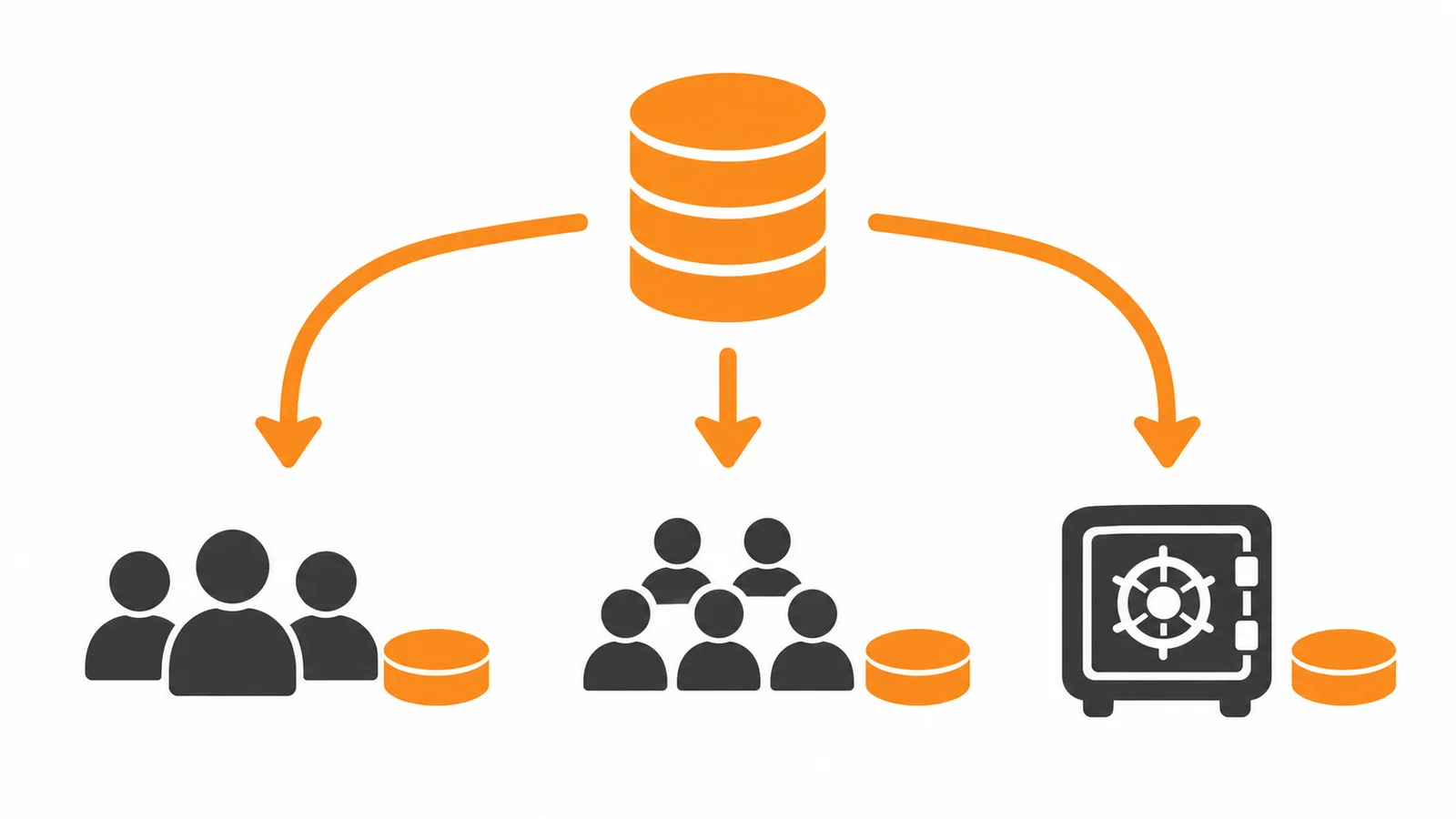
Token allocation shows which groups receive portions of the supply. Common categories include the team, early investors, community, treasury, and ecosystem funds. However, allocation percentages alone do not explain when those tokens become available. That requires examining the vesting schedule.
| Distribution method | Main characteristic |
Immediate release | A specified amount becomes available at the initial stage |
Cliff | A waiting period applies before the first release |
Linear vesting | Tokens unlock gradually over a defined period |
Periodic unlocks | Specified amounts become available on scheduled dates |
Conditional vesting | Distribution depends on predefined milestones or conditions |
Smart contracts can implement customizable vesting schedules. However, their permissions and potential for modification also require examination. An unlock allows the beneficiary to use the tokens. It does not mean those tokens will be sold on the same day. Nevertheless, large unlocks can increase the amount potentially available for sale. Early investors’ acquisition costs and market liquidity matter when assessing the possible impact.
Assessing the size of a token unlock
Consider a hypothetical project with 100 million tokens in circulation. Suppose an upcoming unlock will release another 10 million tokens. That amount equals 10% of the existing circulating supply. Even if maximum supply is 1 billion, focusing only on that maximum could understate the near-term impact.
When evaluating an unlock, examine these factors together:
- Which group owns the tokens.
- The amount becoming available relative to circulating supply.
- Whether the unlock is a one-time event or recurring.
- Exchange order book depth and liquidity.
- Beneficiaries’ previous transfers.
A transfer to an exchange does not provide definitive proof of a sale. The data does not always reveal the full purpose of a transaction.
Token Utility, Incentives, and Supply Changes
Scarcity explains only one side of token economics. Understanding lasting demand also requires examining why users need the asset.
The connection between utility and token demand
A token can provide access to services, facilitate payments, serve as collateral, or support governance. However, project growth does not guarantee a proportional increase in token demand. For example, a platform may collect service fees in other assets. Its user base could grow while demand for its own token remains limited.
The connection between the project’s value proposition and the token’s function therefore deserves attention. How the product’s success benefits token holders should be clear. Governance tokens can provide voting rights over protocol changes or treasury spending. However, the implementation of votes and the scope of authority vary between projects. Concentrated token ownership can also concentrate decision-making power. Wallet counts alone cannot establish whether participation is balanced.
Where staking and yield farming rewards come from
Understanding staking helps explain token incentives. On Proof of Stake networks, staking involves committing assets to the network’s validation mechanism. Some applications also describe simple token-locking programs as staking. Not all such programs contribute to blockchain security. In decentralized finance, or DeFi, yield farming can encompass different activities. Users seek returns by providing liquidity or deploying assets across protocols.
The source of rewards matters as much as the advertised yield. Revenue from user fees and newly distributed tokens have different economic effects. For example, your token balance could increase by 15% while the asset’s price falls. Holding more tokens would not necessarily mean your investment’s total value had increased. Blockchain incentive models can accelerate participation initially. However, it is also important to track whether users continue using the service as rewards decline.
Token burning and net supply changes
Token burning permanently removes assets from supply by making them unusable. Locking can be temporary, so the two mechanisms have different effects. A burn’s impact on circulating supply depends on where the tokens come from. Burning treasury tokens already outside circulation may not reduce the existing market supply by the same amount. If new issuance also occurs, examining only the amount burned gives an incomplete picture. The following formula helps clarify the relationship:
Net change in total supply = Newly issued tokens − Burned tokens
For example, issuing 5 million tokens while burning 2 million produces a net supply increase. A burn does not necessarily make the model deflationary during that period. On Ethereum, the balance between new ETH issuance and burning also determines supply changes. The existence of a burn mechanism does not guarantee that supply decreases in every period.
Market Capitalization and Different Tokenomics Models
Token economics addresses different needs across the digital asset economy. Examining valuation metrics alongside the utility model makes projects easier to compare.
The difference between market capitalization and FDV
Market capitalization equals the token price multiplied by circulating supply. Fully diluted valuation, or FDV, considers a broader supply base. Depending on the data provider, FDV may use total or maximum supply. Check which definition underlies the figure displayed. A hypothetical example using maximum supply could look like this:
| Metric | Value |
Token price | $2 |
Circulating supply | 100 million tokens |
Maximum supply | 1 billion tokens |
Market capitalization | $200 million |
FDV based on maximum supply | $2 billion |
This table shows why a low unit price does not necessarily mean a low valuation. Market capitalization also does not represent the total money invested in a project. FDV does not predict future prices either. It multiplies today’s price by a broader supply figure without guaranteeing that price remains unchanged as supply changes.
GameFi and dual-token economies
Some GameFi projects separate in-game utility and governance into different tokens. One token may support rewards and in-game spending, while another enables participation in decision-making. For example, Axie Infinity’s AXS serves governance and staking functions, while SLP is used to breed new Axies. STEPN defines GST as its in-game utility token and GMT as its governance token.
This separation can make it easier to manage different functions under distinct rules. However, a dual-token model is neither necessary nor successful for every game. The balance between reward issuance and spending demand matters in a game economy. Creating lasting demand can become difficult if users participate only to sell rewards.
Having two tokens does not automatically resolve this problem. Players’ appreciation of the experience and their reasons for participating beyond rewards also deserve consideration.
DePIN and conditional distributions
DePIN stands for decentralized physical infrastructure networks. Participants can earn token incentives by supplying resources such as connectivity, storage, or computing power. In these models, infrastructure deployment needs to develop alongside real customer demand. A rising device count does not mean service revenue is growing at the same rate.
For example, Helium uses Data Credits to pay for network usage. Creating these credits involves burning HNT, linking service usage to the token economy. Some models may also tie ecosystem funding or vesting to performance conditions. Releasing funds as development milestones are completed can connect spending to specific goals.
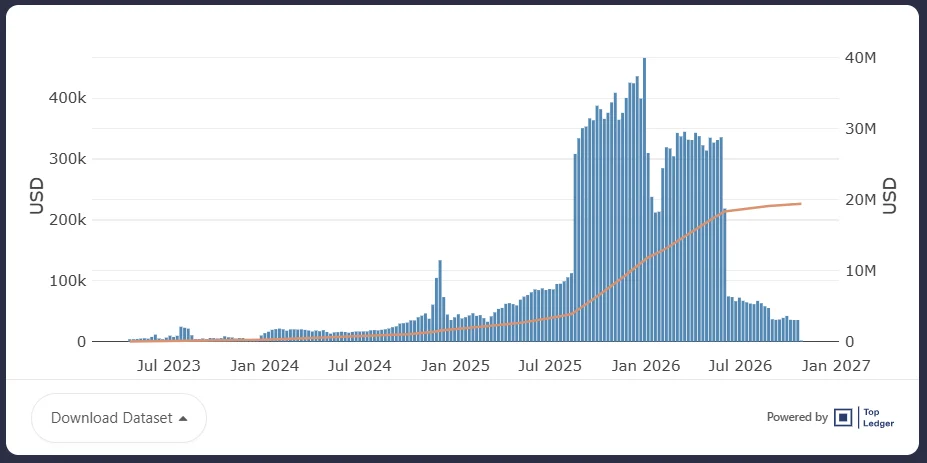
However, projects should explain who measures achievement and who can change the conditions. Vague performance criteria may concentrate decision-making authority within a small group and reduce transparency.
How to Analyze Tokenomics
Tokenomics analysis goes beyond examining an allocation chart. It requires comparing the stated plan with on-chain implementation and actual usage.
Documentation and on-chain data
Start with the white paper, official documentation, and current governance decisions. Older promotional materials may not reflect changes to distribution or issuance rules.
The following checklist provides a starting point for investment analysis:
- Compare circulating, total, and maximum supply.
- Examine allocation groups and vesting schedules.
- Check permissions to issue new tokens and modify contracts.
- Research treasury wallets and spending records.
- Determine whether rewards come from revenue or new distributions.
- Evaluate the token’s connection to the service and user demand.
- Try to verify the identities behind large wallets.
A large wallet may hold an exchange’s customer assets rather than one investor’s holdings. Conversely, multiple wallets may belong to the same person. Address distribution therefore does not always reveal economic ownership directly. Unlabeled data should not be treated as definitive ownership information.
Sustainability and warning signs
A sound economic model seeks to connect participants’ long-term interests with the service’s continued operation. The balance between users, developers, and capital providers matters. Unclear unlock schedules, undisclosed issuance permissions, and demand driven solely by high yields deserve scrutiny. An inability to track treasury spending also makes the model harder to evaluate.
An inflationary model may use new supply to reward useful contributions. A deflationary model may face insufficient demand despite a declining supply. No single feature therefore establishes “good tokenomics.” Technology, security, liquidity, competition, and usage data should also inform the analysis.
Frequently Asked Questions (FAQ)
Below are answers to some frequently asked questions about token economics and tokenomics:
- How can we tell whether a project has good tokenomics?: Look for clear supply rules, traceable allocations, understandable incentives, and a connection to actual usage. These features do not guarantee success or price appreciation.
- Does token burning always increase the price?: No. The amount burned, new issuance, demand, and market conditions all affect the outcome. Burning tokens outside circulation can also have different effects.
- Can tokenomics replace investment advice?: No. It helps explain a project’s economic structure but does not independently account for security, liquidity, and market risks.
- Why does the token allocation plan matter?: It shows who controls tokens and when they become available. This helps assess potential selling pressure and governance power.
- Why do some GameFi projects use two tokens?: They may separate in-game utility and rewards from governance. However, not every GameFi project uses two tokens.
- What rights do governance tokens give holders?: Depending on the project, they may allow holders to submit proposals, vote, or delegate voting power. Company ownership or revenue-sharing rights do not arise automatically.
Explore JrKripto’s staking and DeFi guides for a closer look at incentives within token economies.